Gray-footed Chipmunk
Neotamias canipes
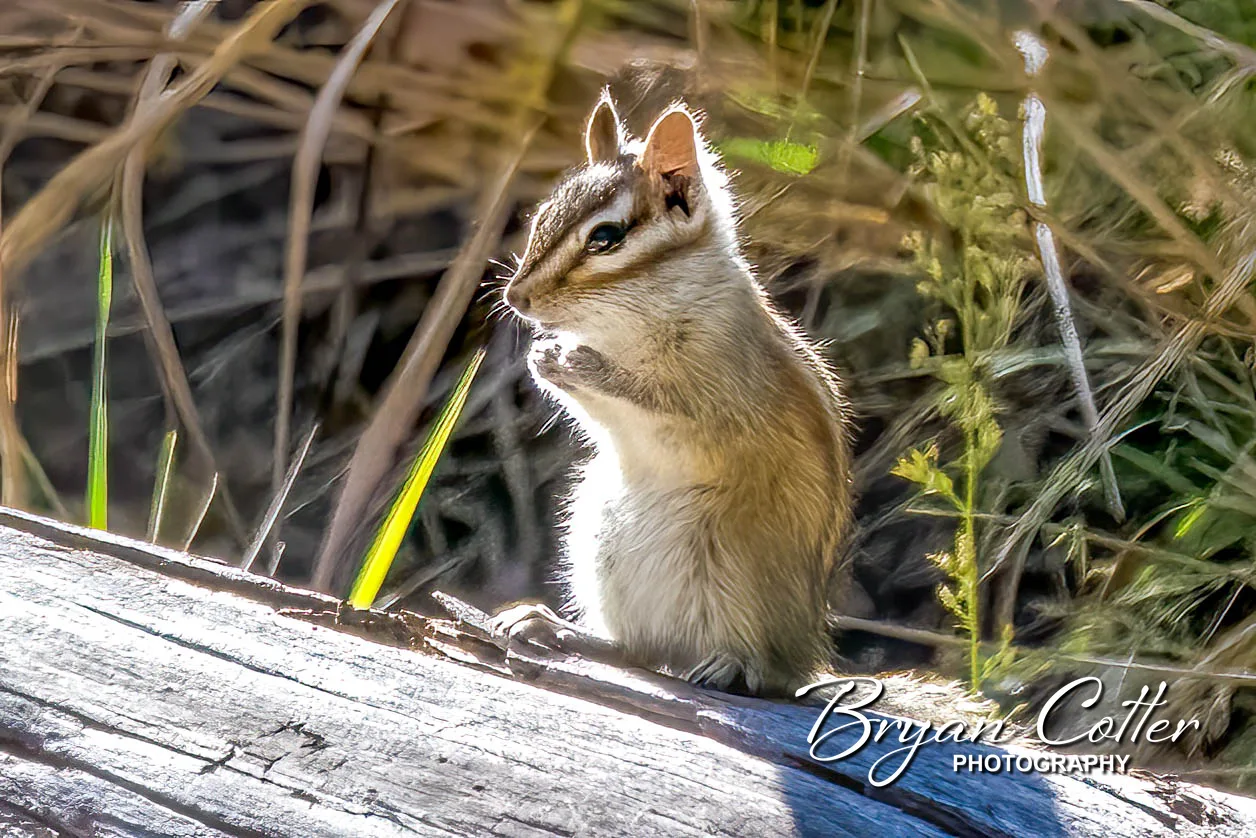
About the Gray-footed Chipmunk
A small striped ground squirrel of the high country, grayish overall with the dark and pale stripes down the back and face that mark every chipmunk, warm rufous tones on the rump and flanks, and the grayish feet that give it its name. The tail is long and flattish and is usually carried straight up when the animal runs.
Chipmunks are constantly busy and constantly noisy, giving sharp chipping calls from rocks and logs, often for minutes at a time. They stuff seeds and nuts into cheek pouches that expand until the head looks deformed, then carry the load back to a burrow or a cache. Unlike true hibernators they do not fatten heavily for winter; instead they store food and wake periodically through the cold months to eat from the larder.
They live in burrows dug beneath rocks, logs, or root tangles, with the entrance kept inconspicuous.
The range is what makes this one worth noting: the Gray-footed Chipmunk is restricted to a handful of mountain ranges in southern New Mexico and West Texas, including the Guadalupe and Davis Mountains. These are sky islands - cool forested peaks stranded above desert - and the animals on them are cut off from their relatives. Seeing one means being somewhere quite specific.
Join one of my guided birding tours! Fine art prints of my photos are also available.
© 2026 Bryan Cotter Photography privacy policy terms of use site by cotter designs