Eastern Meadowlark
Sturnella magna
About the Eastern Meadowlark
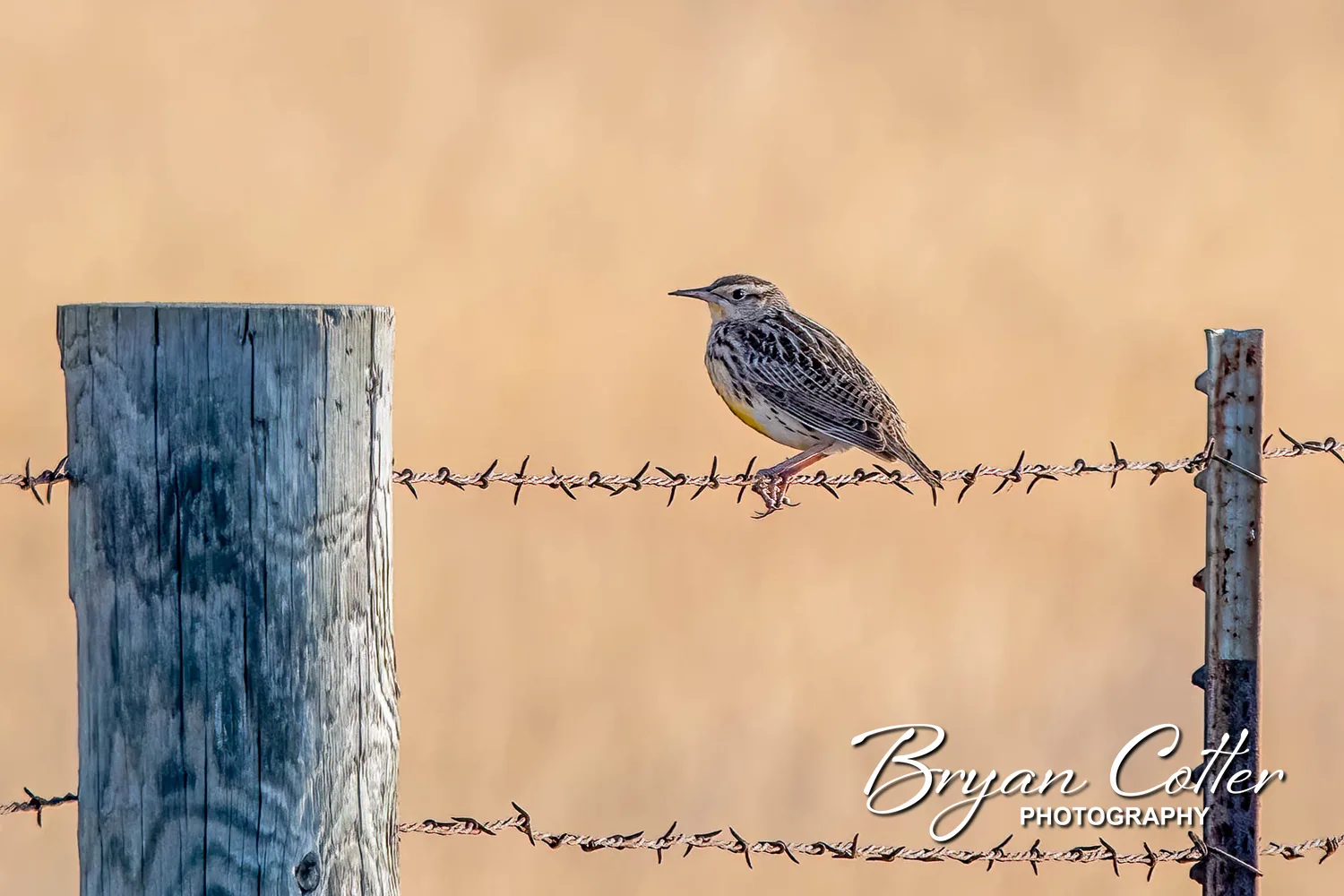
A chunky, short-tailed grassland bird with a brilliant yellow breast crossed by a bold black V, cryptic brown-and-buff streaking above, and white outer tail feathers that flash in flight. Despite the name it is not a lark at all but a member of the blackbird family, and the long sharp bill shows it.
On the ground in grass it nearly disappears; on a fence post facing you it is one of the most striking birds in Texas. The flight is distinctive - a few stiff rapid wingbeats followed by a short glide, low over the grass.
Separating it from the Western Meadowlark is a real problem where the two overlap, which is much of Texas, because the plumage differences are slight and variable. Voice is the honest answer. The Eastern sings a clear, plaintive series of slurred whistles, simple and pure; the Western's song is lower, richer, and more jumbled and flute-like.
They nest on the ground in dense grass, weaving a domed roof over the cup with a side entrance, which makes the nest almost impossible to find and very vulnerable to early mowing.
Eastern Meadowlarks remain widespread in Texas year-round, but the species has declined severely across its range as grassland has been lost and hayfields cut earlier - one of the steepest losses among common North American birds.
Join one of my guided birding tours! Fine art prints of my photos are also available.
© 2026 Bryan Cotter Photography privacy policy terms of use site by cotter designs