Black Bear
Ursus americanus
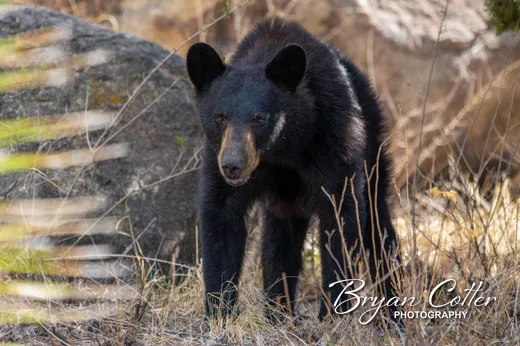
About the Black Bear
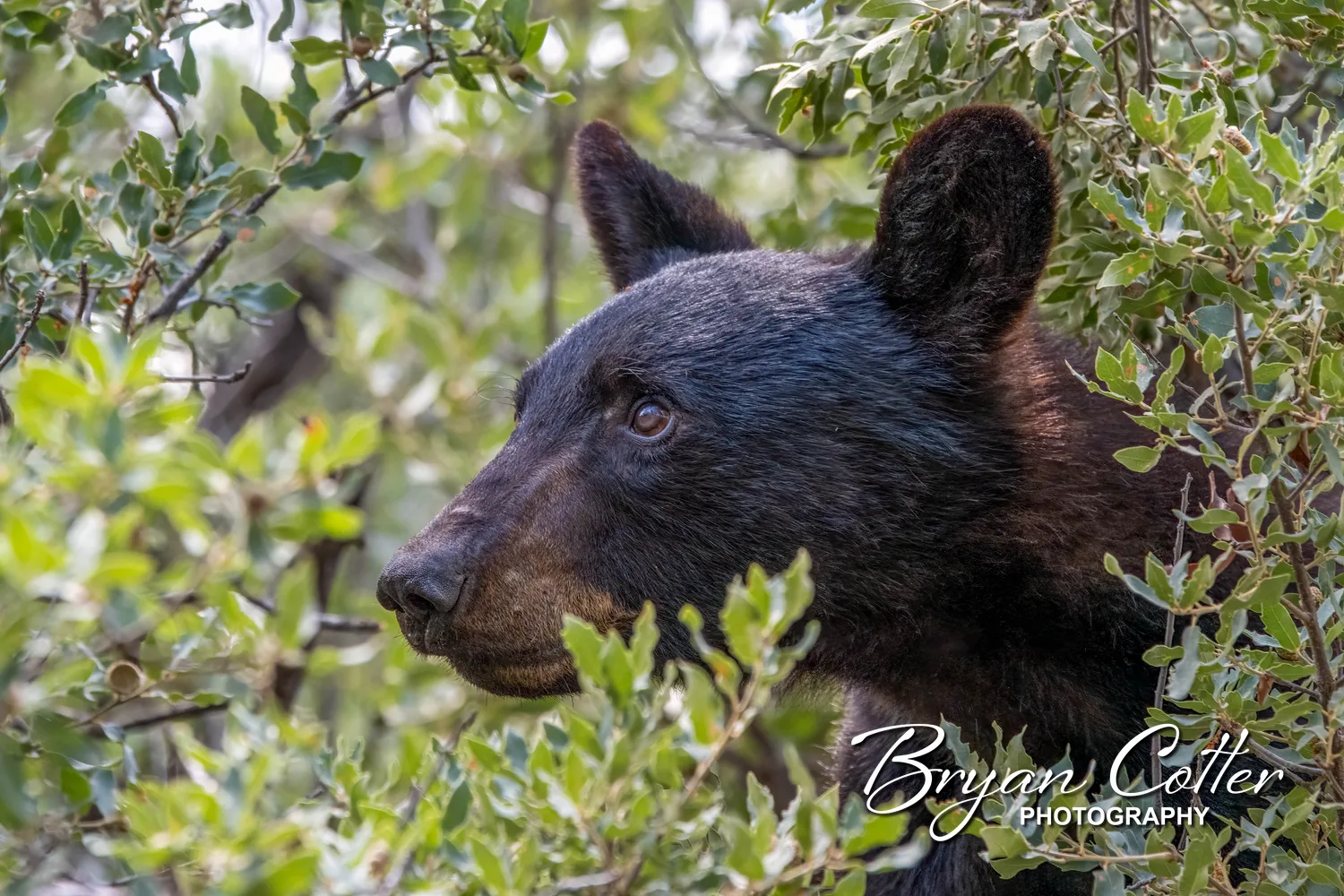
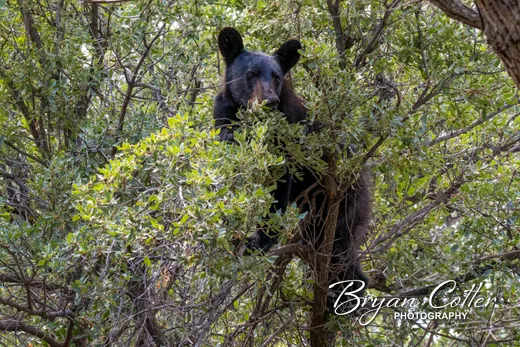
A heavy, powerful, surprisingly quiet animal, black or brown-black with a tan muzzle, small rounded ears, and no shoulder hump - the feature that separates it from a grizzly, which does not occur here. Despite the bulk they are agile climbers and can move far faster than their shape suggests.
Black Bears are omnivores that lean heavily vegetarian. Acorns, madrone and juniper berries, sotol hearts, insects, and carrion make up most of the diet, and in the Chisos the autumn acorn crop largely decides how well the population does in a given year. They are mostly crepuscular, working the cooler ends of the day and lying up in shade through the heat.
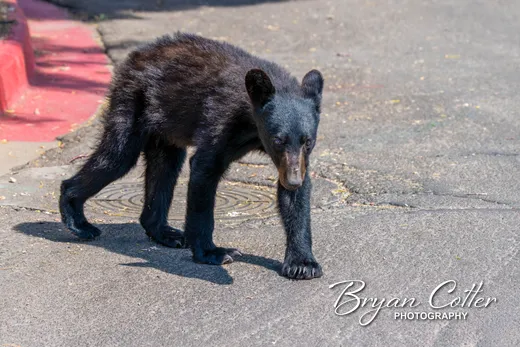
Females den through the coldest months and give birth in the den to cubs weighing well under a pound. The cubs stay with her through their first year and a half, and she will not breed again until they leave.
The Texas story is the interesting part. Black Bears were effectively wiped out of the state by the 1950s. From the 1980s onward they walked back into Big Bend on their own from the Sierra del Carmen in Mexico, unaided, and re-established a breeding population in the Chisos Mountains. Seeing one there is seeing a recolonisation still in progress.
Join one of my guided birding tours! Fine art prints of my photos are also available.
© 2026 Bryan Cotter Photography privacy policy terms of use site by cotter designs