Upland Sandpiper
Bartramia longicauda


About the Upland Sandpiper
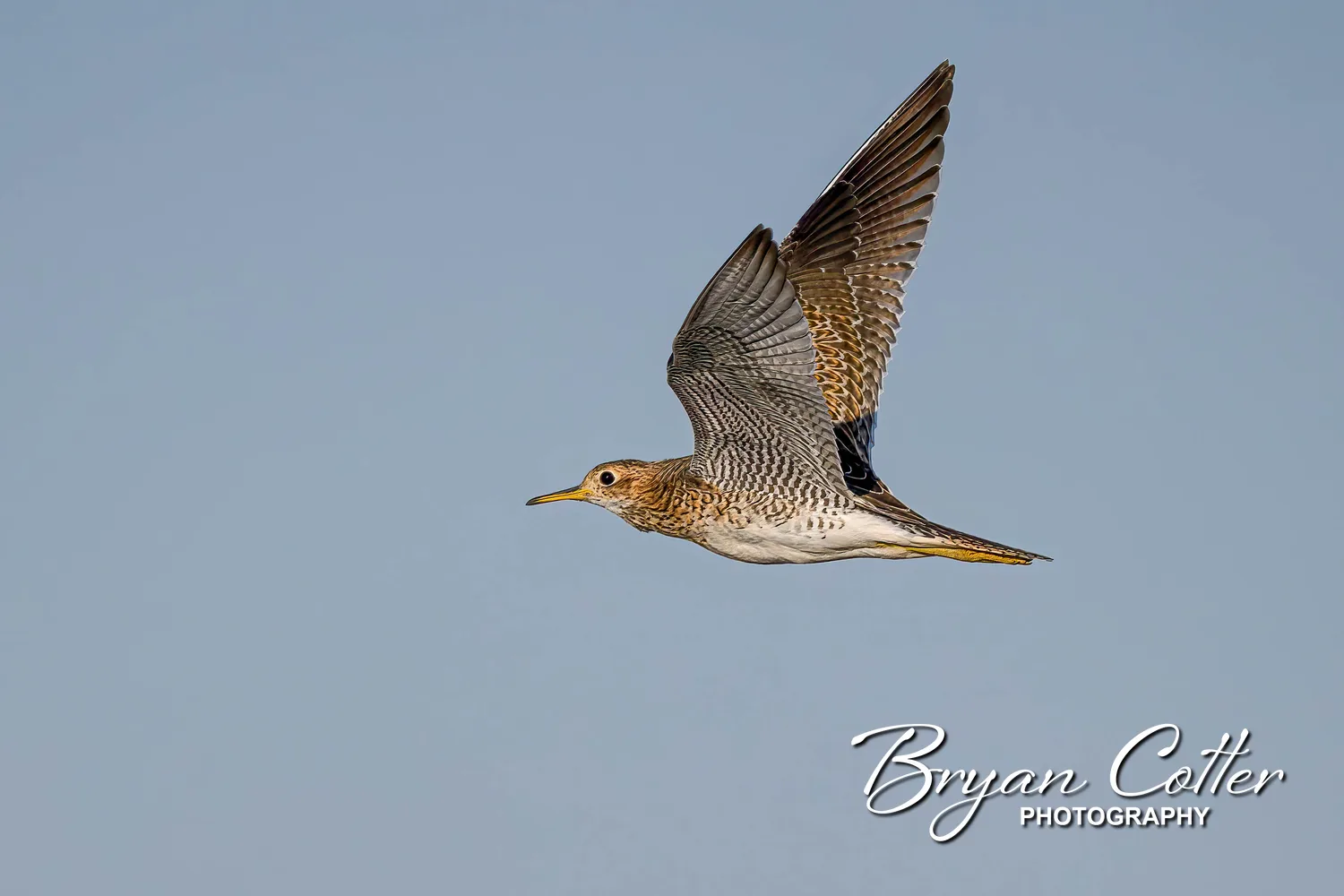
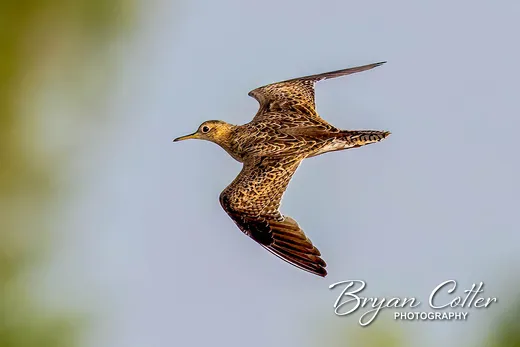
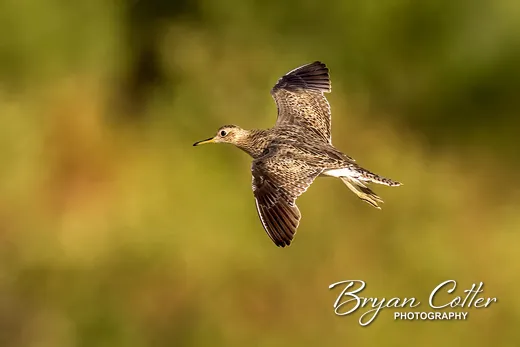
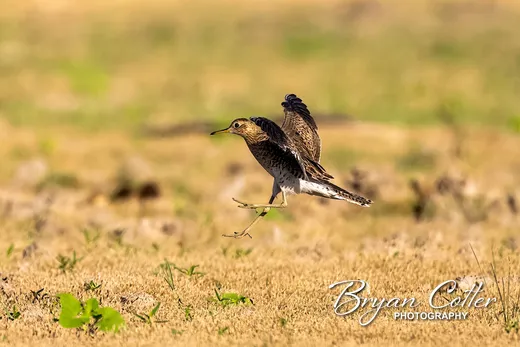
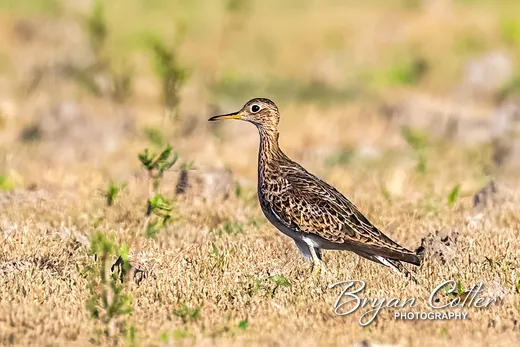
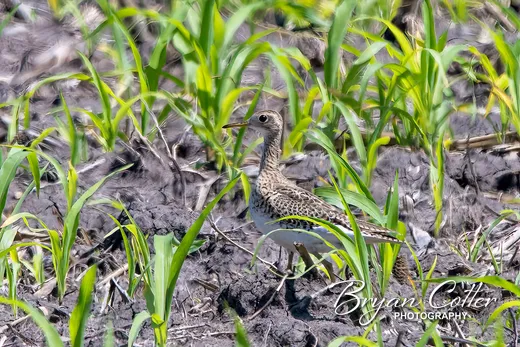
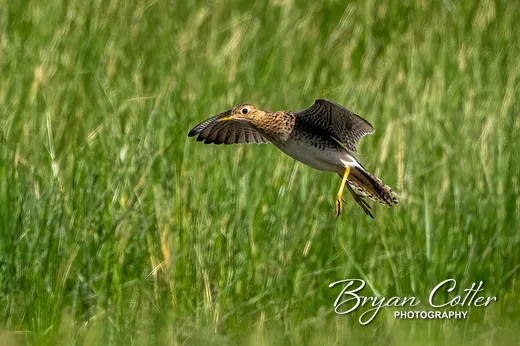
A shorebird that has given up the shore. The Upland Sandpiper is a bird of dry grassland, with a small dove-like head on a surprisingly long thin neck, a short straight bill, large dark eyes, and a long tail - an odd, top-heavy silhouette that is recognisable at a distance even in poor light. The plumage is finely barred brown and buff, ideal for standing in grass.
Its habit of perching on fence posts is the classic image, and a bird dropping onto a post and holding its wings up over its back for a moment before folding them is characteristic. The call is one of the great sounds of open country, a long rippling wolf-whistle that carries for a remarkable distance and is often given in flight overhead at night during migration.
It nests on the ground in tall grass, well hidden, and depends on large unbroken tracts of native prairie - which is why the species has declined so sharply as that habitat was ploughed and fragmented.
In Texas the Upland Sandpiper is mostly a passage migrant, moving through in spring and again from July onward on its way to South America, where it winters on the pampas. Look for it on short-grass pasture and airfields rather than water, often in loose scattered groups rather than tight flocks.
Join one of my guided birding tours! Fine art prints of my photos are also available.
© 2026 Bryan Cotter Photography privacy policy terms of use site by cotter designs