Prairie Warbler
Setophaga discolor
About the Prairie Warbler
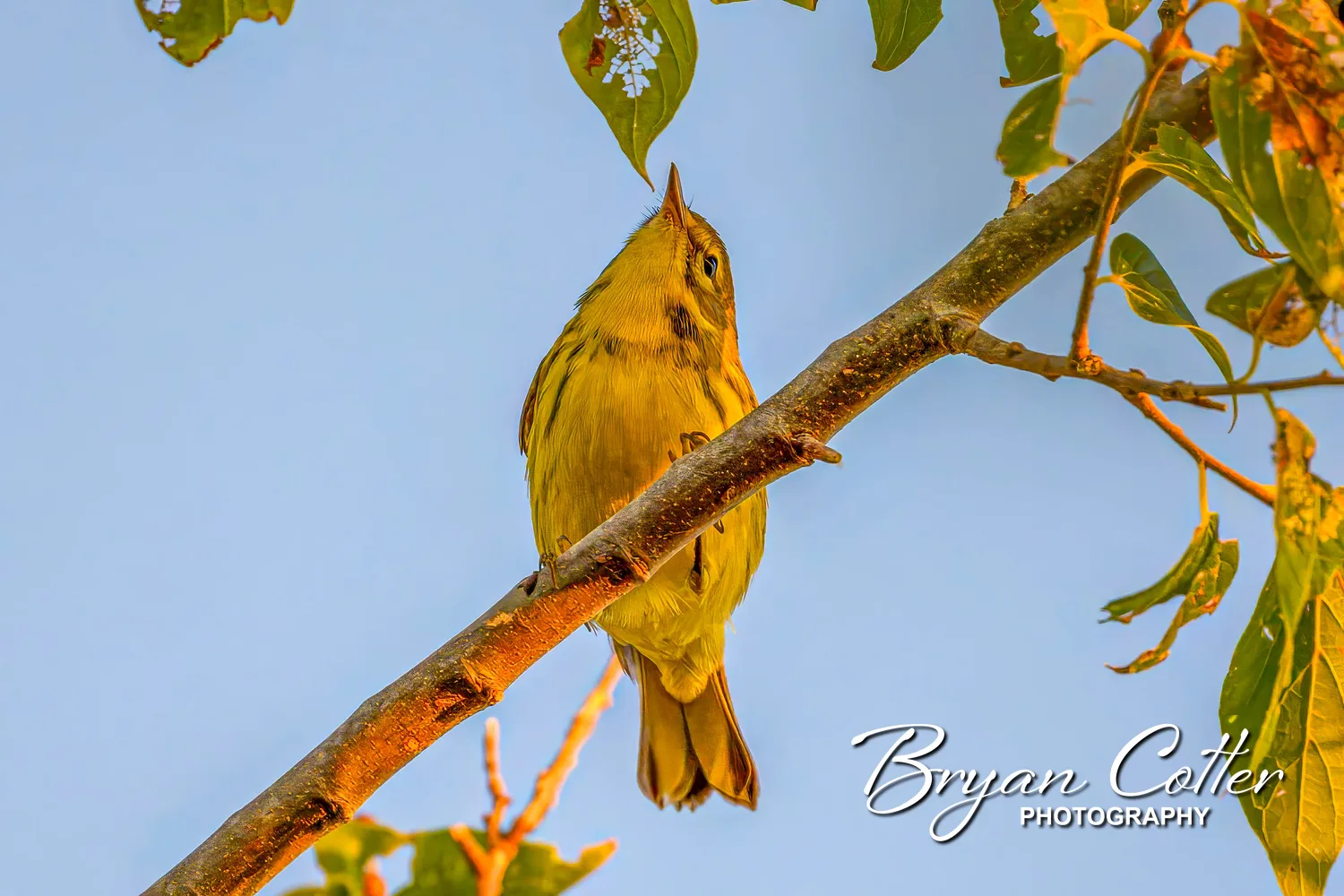
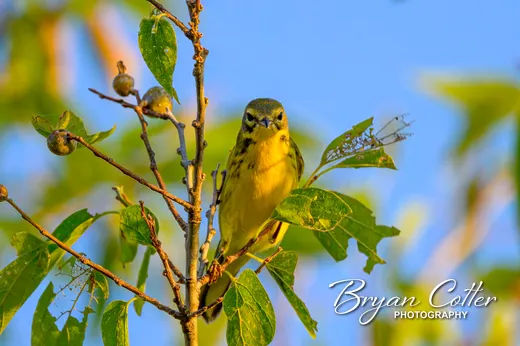
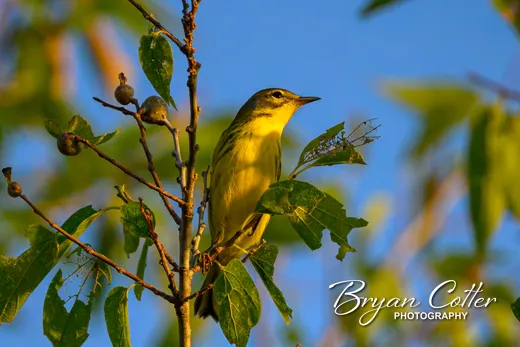
A small, bright warbler, olive-green above and clear yellow below, with a line of sharp black streaks down each side, a black crescent under the eye, and a dark line through it. The male shows chestnut streaking on the back that is often hard to see in the field. It is one of the more confiding warblers, working low in scrub rather than high in a canopy.
The tail is the giveaway even when the bird is facing away: Prairie Warblers pump and flick it almost constantly. The song is unmistakable once learned, a rising series of buzzy zee notes climbing the scale like someone running a finger up a comb.
Almost nothing about the name is accurate. This is a bird of dense young scrub, brushy old fields, and regenerating clear-cuts - the early stages of woodland coming back, not open grassland. That habitat is temporary by nature, so the species depends on disturbance keeping it available.
In Texas the Prairie Warbler is chiefly a migrant, passing through in spring and again in late summer and autumn, with a small breeding population in the east of the state. It is a bird you find by working brushy edges rather than mature woods, and it often turns up in the scrubby margins of well-watched migrant traps.
Join one of my guided birding tours! Fine art prints of my photos are also available.
© 2026 Bryan Cotter Photography privacy policy terms of use site by cotter designs