Lucerne Moth
Nomophila nearctica
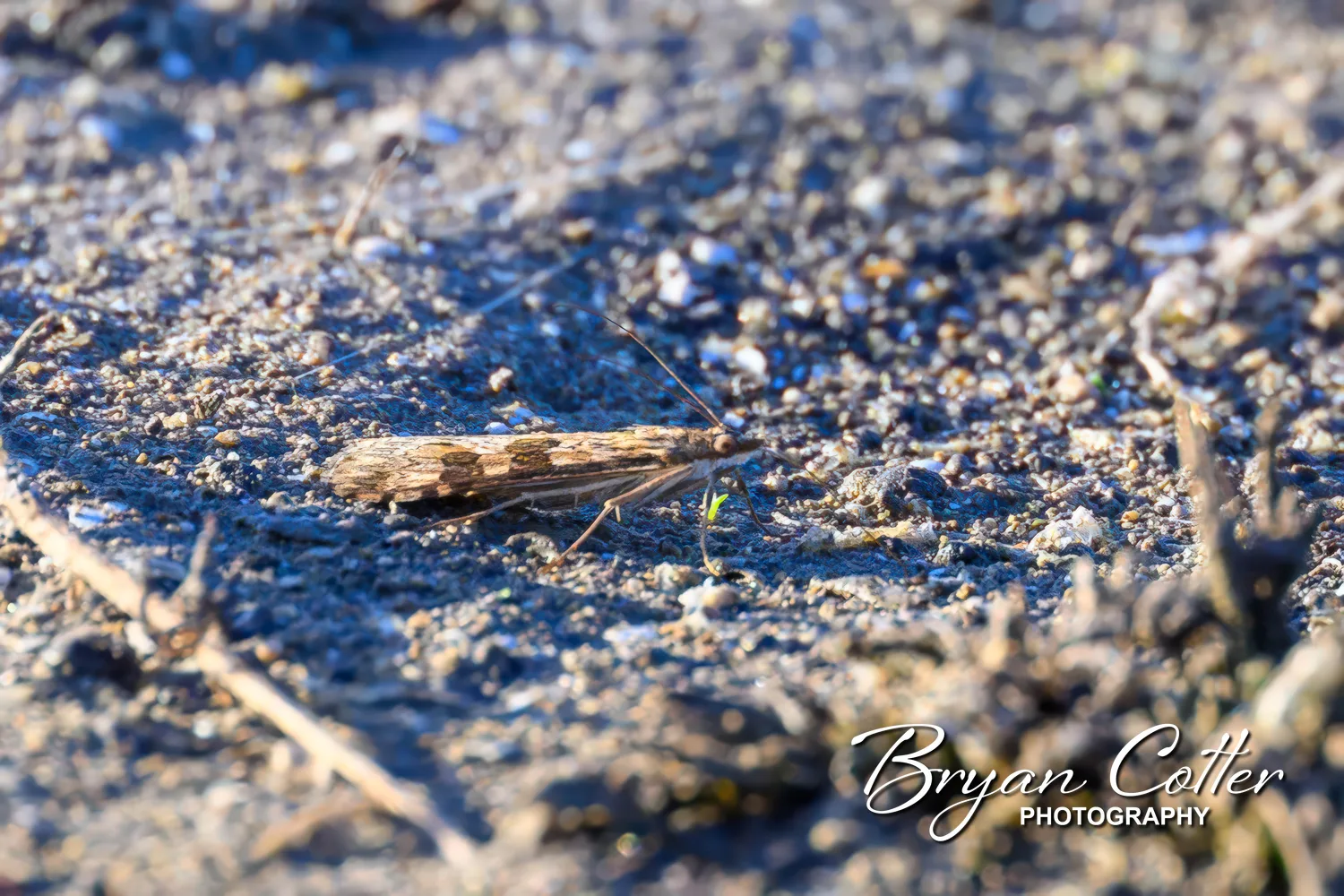
About the Lucerne Moth
A narrow, long-winged little moth that rests with its wings folded tight along the body, giving it a pencil-thin outline quite unlike the triangular shape most moths hold. The forewings are dull tan and gray, marked with a pair of darker kidney-shaped spots and fine dark streaks - camouflage for dead grass and leaf litter, which is exactly where it spends its time.
It is one of the moths people flush constantly without registering. Walk through weedy grass on a summer afternoon and small pale moths burst up ahead of you, fly a few yards low and fast, and drop back into cover: many of those are Lucerne Moths. They are active by day as well as at night, and they come readily to lights.
The name comes from lucerne, the old name for alfalfa, one of the larval food plants. Caterpillars feed on clover, alfalfa, and other low-growing plants, living in loose silken tubes among the stems at ground level rather than out in the open.
The species is widespread across North America and common throughout Texas, with several overlapping generations a year, and it is a strong migrant - numbers build through late summer and autumn as moths move south, which is when they turn up in the greatest quantity.
Join one of my guided birding tours! Fine art prints of my photos are also available.
© 2026 Bryan Cotter Photography privacy policy terms of use site by cotter designs