Killdeer
Charadrius vociferus
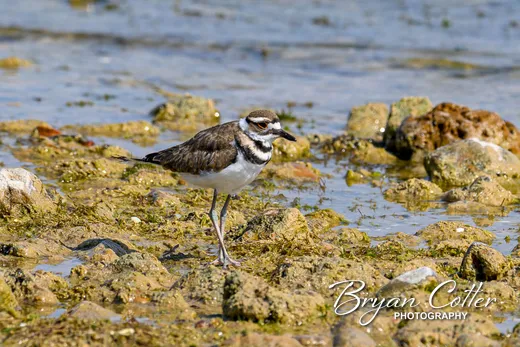

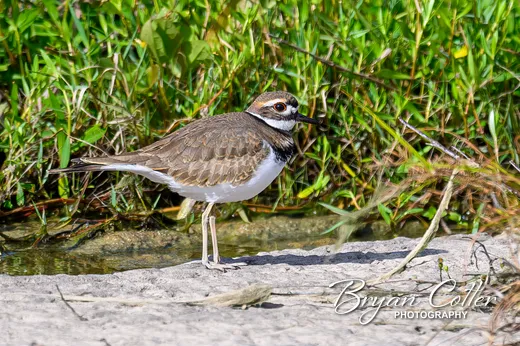
About the Killdeer
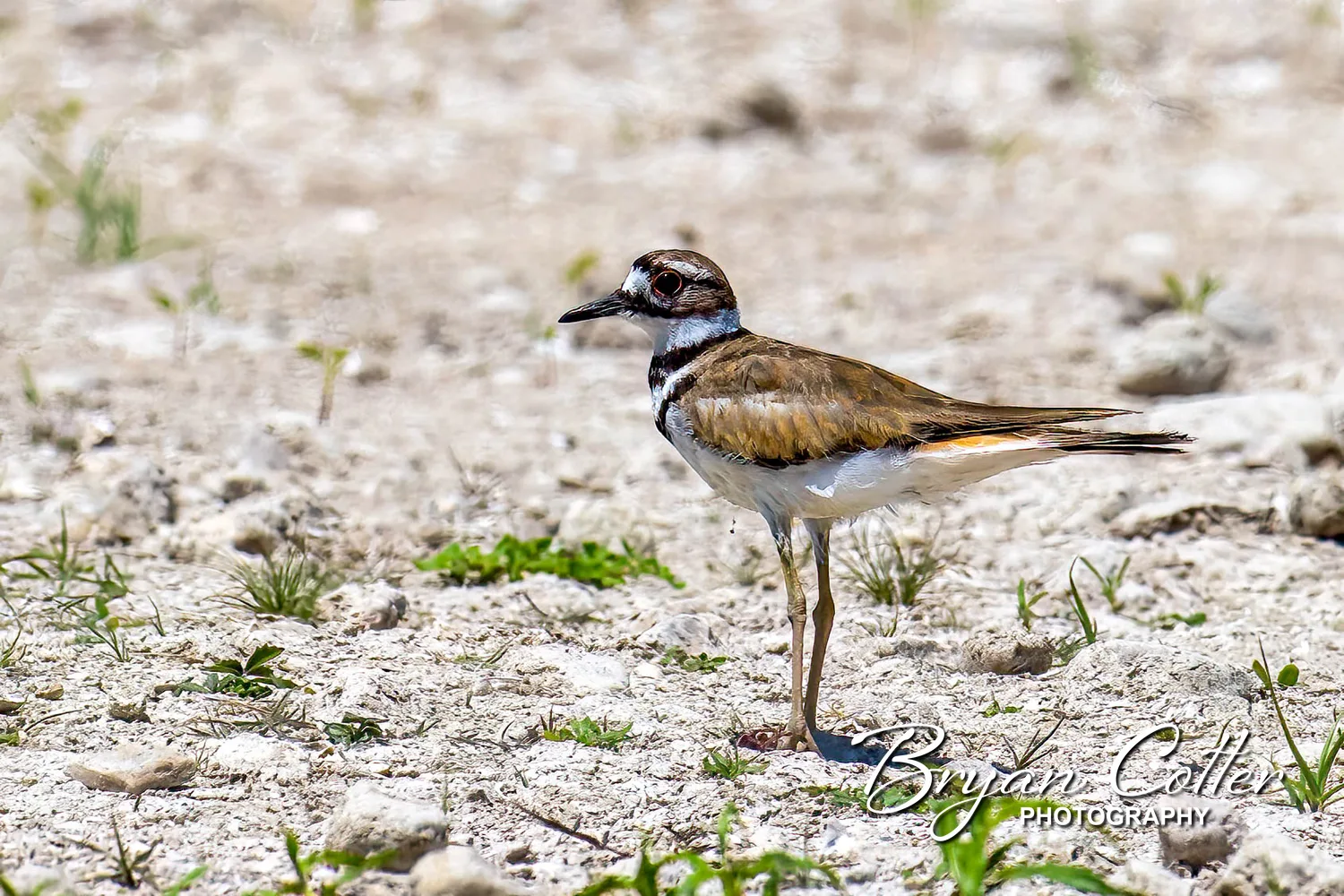
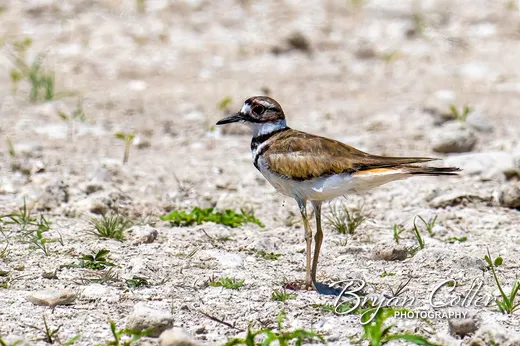
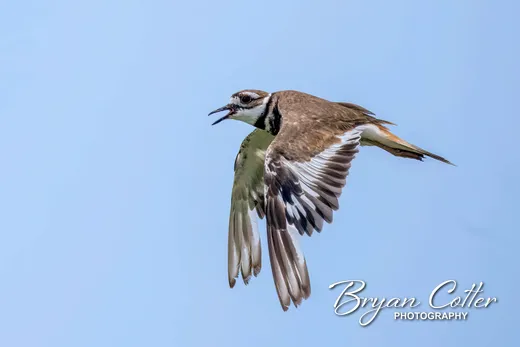
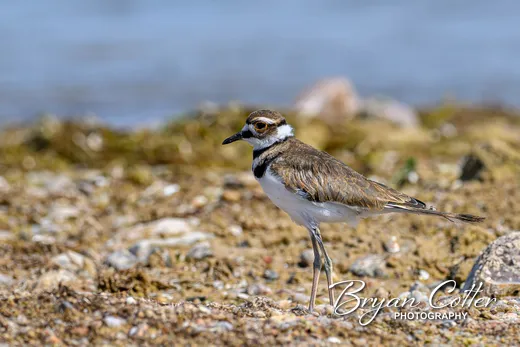
A large, long-legged plover with two clean black bands across a white chest, a brown back, and a bright orange rump that flares open in flight. It is the shorebird most Texans see without ever going to the shore, at home on gravel parking lots, ball fields, pasture, and the bare margins of stock tanks as readily as on a mudflat.
Killdeer feed the way all plovers do, in a run-stop-tilt rhythm: a quick dash across open ground, an abrupt freeze, then a stab at whatever moved. They are noisy and hard to overlook, calling their own name in a piercing kill-deer that carries a long way, and they call at night as often as by day.
The nest is barely a nest at all, just a scrape in gravel with a few pebbles arranged around it, and the eggs are so well camouflaged they are nearly impossible to see. This is the bird famous for the broken-wing display: approach a nest and the adult will stagger away dragging a wing, loudly, until it has drawn the intruder far enough off, then fly up perfectly healthy. Against cattle and horses, which cannot be lured, it will instead run at them and try to make them turn.
They are year-round residents throughout Texas, and their tolerance of human ground is why they are among the most familiar shorebirds in the state.
Join one of my guided birding tours! Fine art prints of my photos are also available.
© 2026 Bryan Cotter Photography privacy policy terms of use site by cotter designs