Carolina Chickadee
Poecile carolinensis


About the Carolina Chickadee
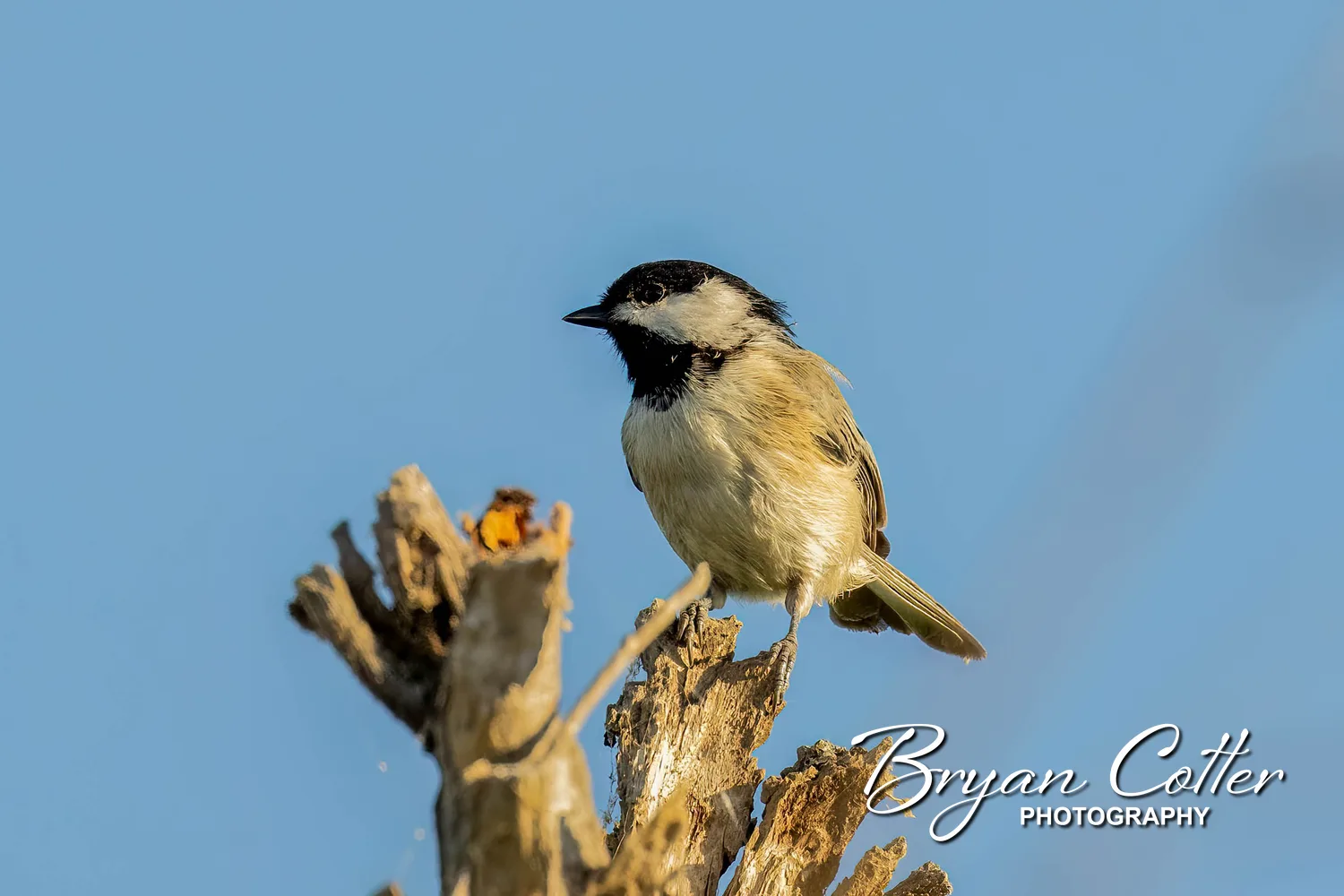
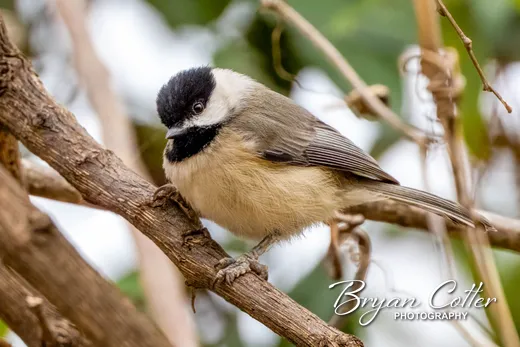
A tiny, round, endlessly busy songbird in soft gray with a black cap and a black bib under a white cheek. It is the chickadee of the southern states, replacing the Black-capped Chickadee across most of Texas, and the two are near-identical in the small area where they meet. Everything about it is quick - the way it hangs upside down from a twig tip, the way it takes a seed and darts off with it rather than lingering.
The voice gives it away long before the bird does. The name comes from the scolding chick-a-dee-dee-dee call, and there is real information in it: the more dee notes, the more dangerous the threat the bird has spotted. The song is a clear four-note whistle, higher and faster than a Black-capped's two-note version.
Chickadees are cavity nesters, excavating a hole in soft rotten wood or taking over an old woodpecker hole or a nest box, then lining it with moss and fur. They cache food through the year, hiding thousands of seeds in bark crevices and remembering where.
In Texas they are year-round residents wherever there are trees, and in winter they form the core of the mixed flocks that titmice, kinglets, warblers, and woodpeckers all travel with - find the chickadees and the rest of the flock is usually close by.
Join one of my guided birding tours! Fine art prints of my photos are also available.
© 2026 Bryan Cotter Photography privacy policy terms of use site by cotter designs