Alligator
Alligator mississippiensis

About the Alligator
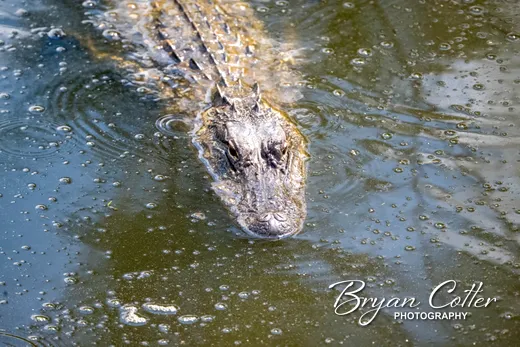
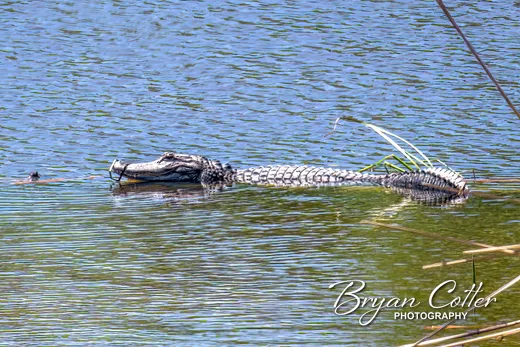
The largest reptile in North America, and along the upper Texas coast a routine part of any freshwater marsh. An adult is armour-plated in dark olive and black, with a broad rounded snout that separates it at a glance from a crocodile's narrow one, and a row of bony ridges down the back and tail. Only the upper teeth show when the mouth is closed. Young animals are boldly banded in yellow and fade as they grow.
Alligators spend much of the day floating with just eyes and nostrils above the surface, or hauled out on a bank soaking up heat, since like all reptiles they cannot generate their own. They are ambush hunters, capable of astonishing speed over a short distance from a dead stop. In spring the males bellow, a low rolling sound that vibrates the water around them into a fine spray.
The female builds a mound of rotting vegetation and lays her eggs inside it, letting the heat of decay do the incubating. Nest temperature decides the sex of the young. She guards the nest fiercely, opens it when she hears the hatchlings calling from inside, and may carry them to water in her mouth. Young alligators stay near her for a year or more.
Nearly wiped out by hunting by the middle of the last century, the American Alligator recovered so completely after protection that it is now a standard fixture of Texas coastal wetlands - one of the clearest conservation successes on the continent.
Join one of my guided birding tours! Fine art prints of my photos are also available.
© 2026 Bryan Cotter Photography privacy policy terms of use site by cotter designs