Yellow-bellied Sapsucker
Sphyrapicus varius
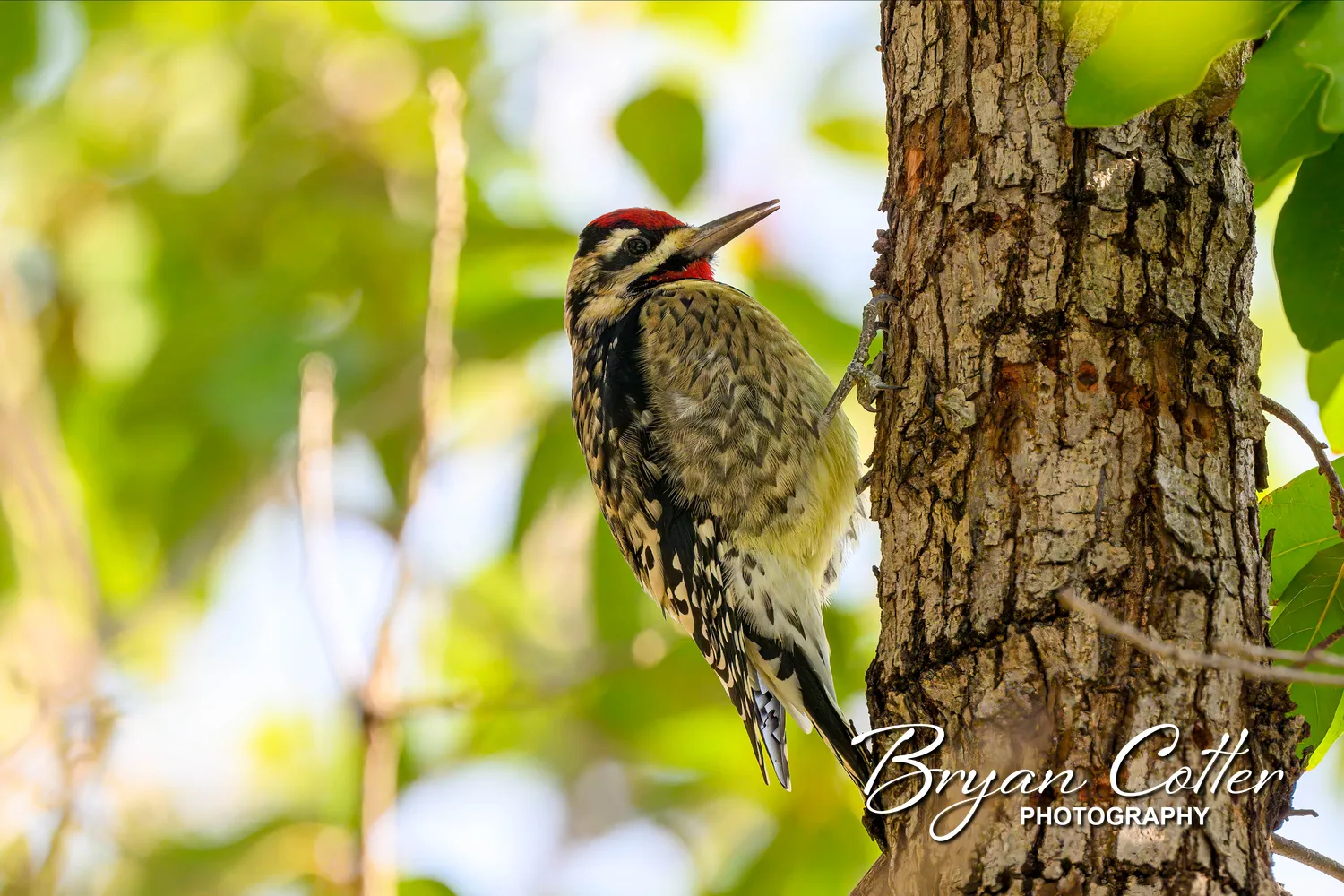
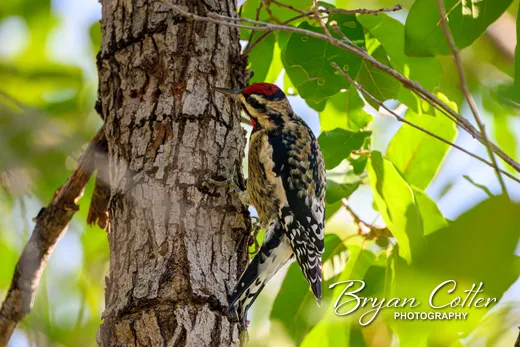
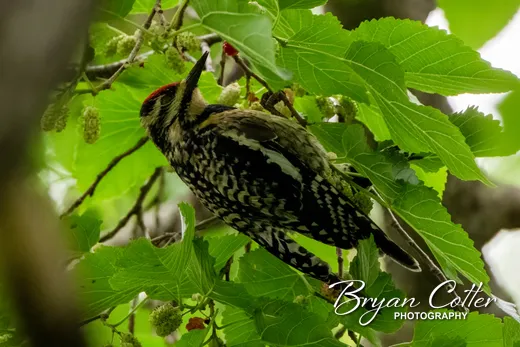
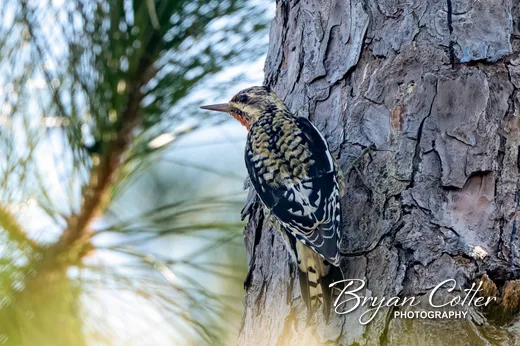
About the Yellow-bellied Sapsucker
A medium-sized woodpecker with a long white slash down the folded wing that identifies it at a glance, even at distance and even on a bird facing away. The rest is a fine black-and-white barring and mottling over the back, a red forecrown, a black bib across the chest, and a pale yellow wash low on the belly that the name promises and the bird rarely shows off. Males add a red throat; on females the throat is white. First-winter birds are a muddy brown version of the adult pattern and can confuse people well into their first spring.
The name is honest. Sapsuckers drill orderly horizontal rows of small square wells into living bark, then work a circuit of those wells to drink the sap that pools and to eat the insects it traps. Rows of neat holes ringing a tree trunk are the surest sign one has been present, and the wells are used opportunistically by other species - hummingbirds, warblers, and squirrels all visit them. They are quiet birds compared to other woodpeckers, more often noticed by a soft mewing call or by the irregular, stuttering drum that sounds like Morse code rather than a steady roll.
They breed far to the north, across Canada and the northern United States, and are the only truly migratory woodpecker in eastern North America.
In Texas the Yellow-bellied Sapsucker is a winter bird, arriving around October and staying into April, and it turns up wherever there are decent trees - river bottoms, city parks, pecan groves, and neighborhood yards. Individuals often hold the same small territory all winter, returning to the same trunk day after day to work their wells.
Join one of my guided birding tours! Fine art prints of my photos are also available.
© 2026 Bryan Cotter Photography privacy policy terms of use site by cotter designs