Western Bluebird
Sialia mexicana
About the Western Bluebird
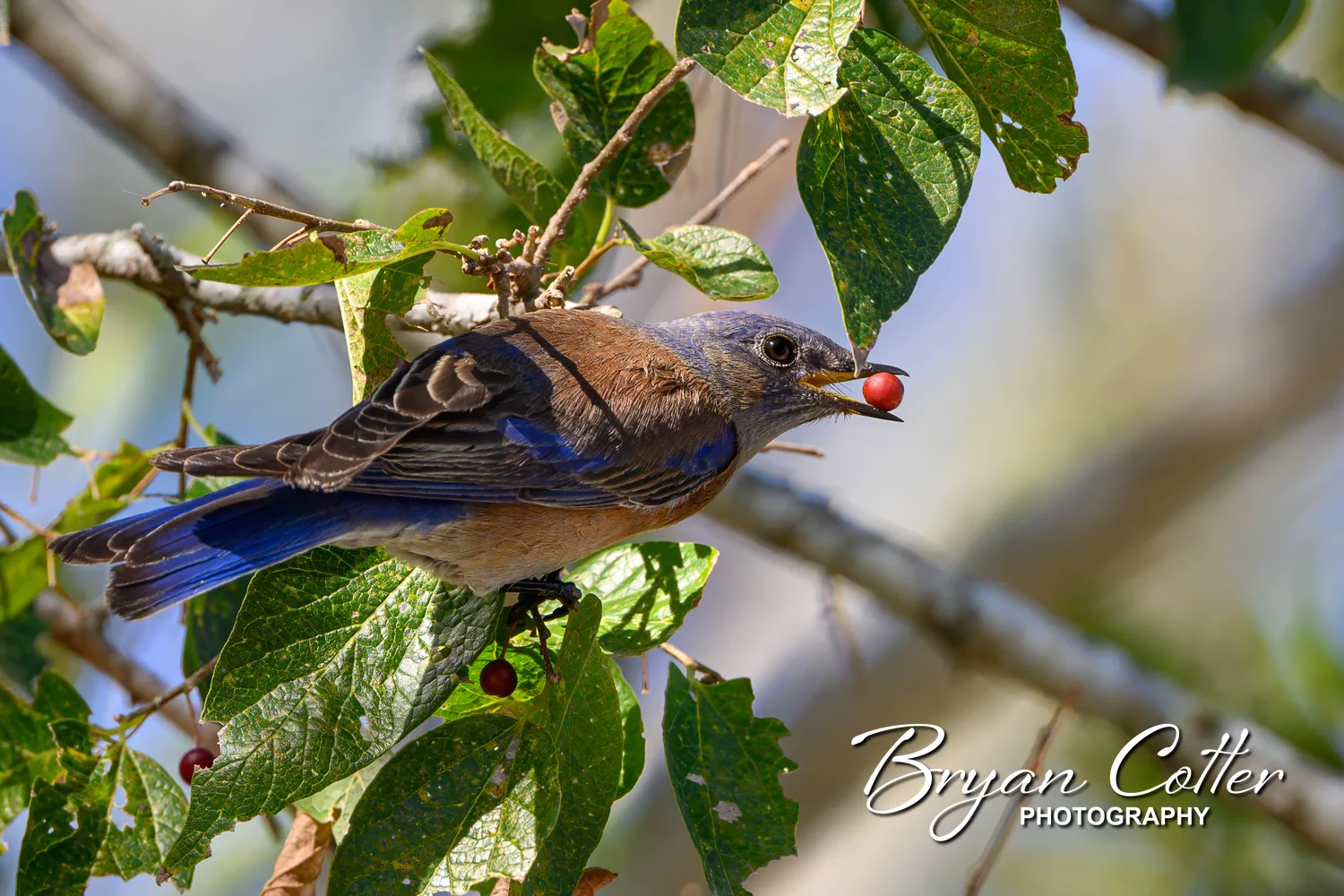
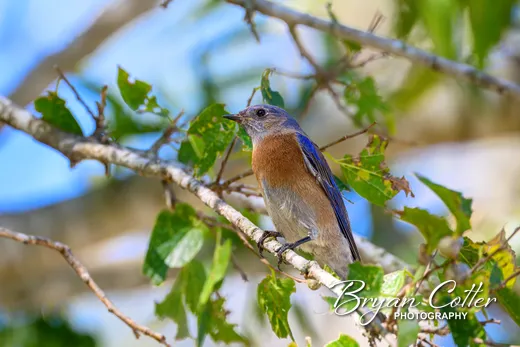
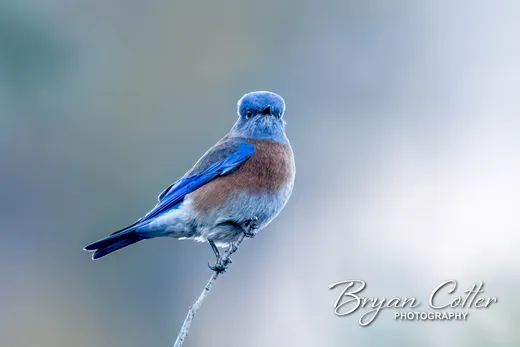
A compact, round-headed thrush, deeper and more saturated in color than the familiar Eastern Bluebird. The male is a rich cobalt over the head, throat, wings, and tail, with rusty orange across the breast and, most usefully, a wash of the same rust spilling onto the upper back and shoulders. The throat is blue rather than orange - the single cleanest way to separate him from an Eastern Bluebird, whose orange runs right up under the chin. Females are muted versions of the same pattern, gray-headed with blue confined mostly to the wings and tail.
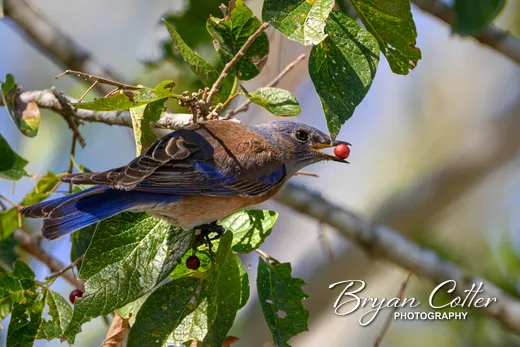
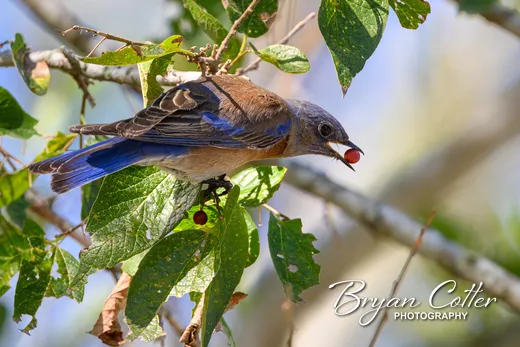
Western Bluebirds hunt from low perches, dropping to take insects off open ground and returning to a fence wire or a bare branch to swallow them. Outside the breeding season they gather in small loose flocks, often mixing with Eastern Bluebirds where the two overlap, and they turn heavily to fruit in winter - mistletoe berries above all, along with juniper and hackberry. They nest in tree cavities and old woodpecker holes and will readily take a nest box.
In Texas this is primarily a bird of the Trans-Pecos mountains and the western Edwards Plateau. In Central Texas it is a scarce and irregular winter visitor, turning up in some years and not others, so a bird well east of the Hill Country is a genuinely good local record. The birds photographed here were a small group of two or three found at Roy G Guerrero Park in Travis County in November 2024, working the trees along the Colorado River bluff alongside Eastern Bluebirds - an unusually convenient chance to see the two species side by side and compare that blue throat directly.
Where they do appear, they tend to stay as long as the fruit holds out, so a wintering group can linger for weeks in the same few trees.
Join one of my guided birding tours! Fine art prints of my photos are also available.
© 2026 Bryan Cotter Photography privacy policy terms of use site by cotter designs