Cedar Waxwing
Bombycilla cedrorum

About the Cedar Waxwing
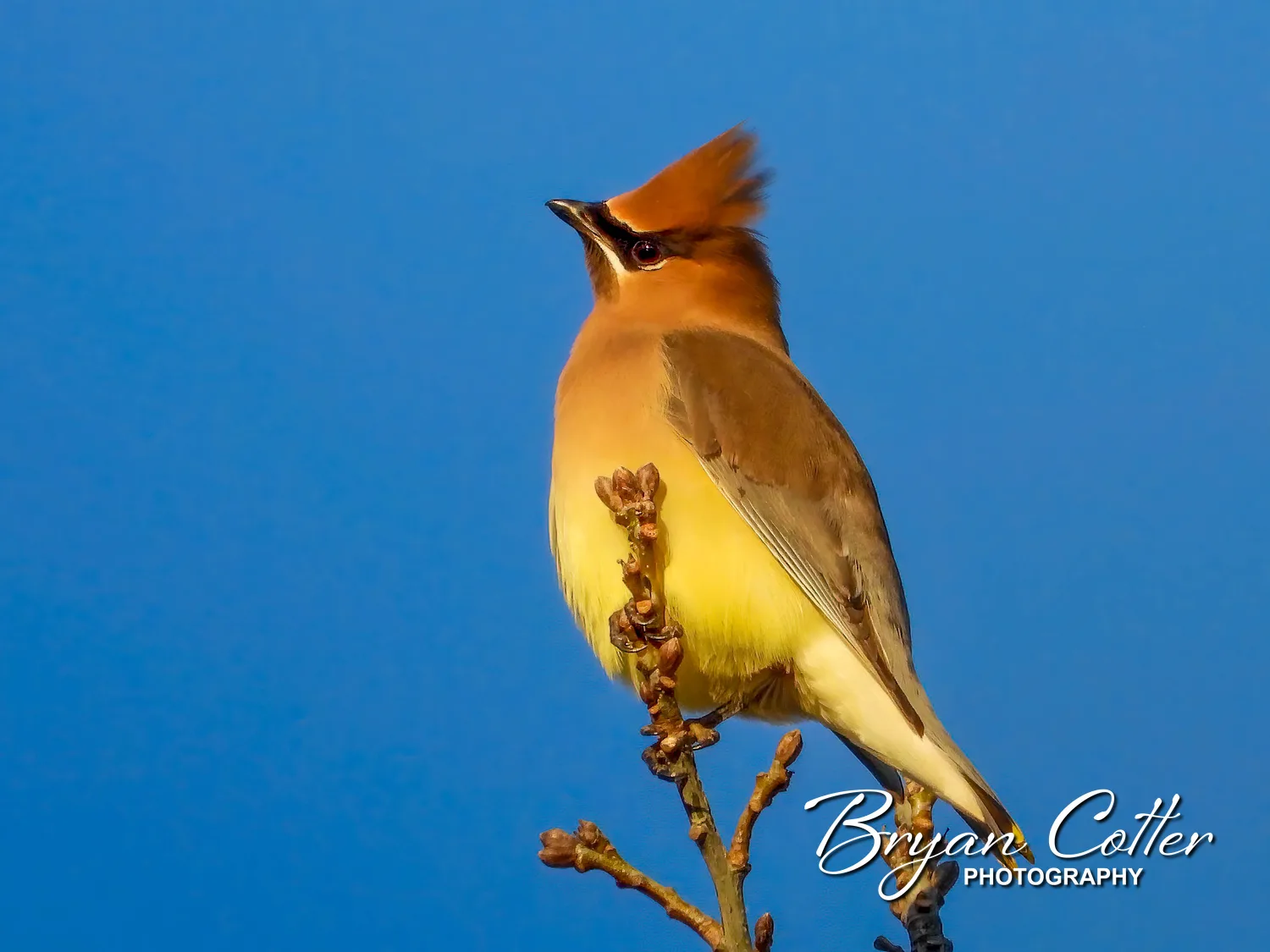
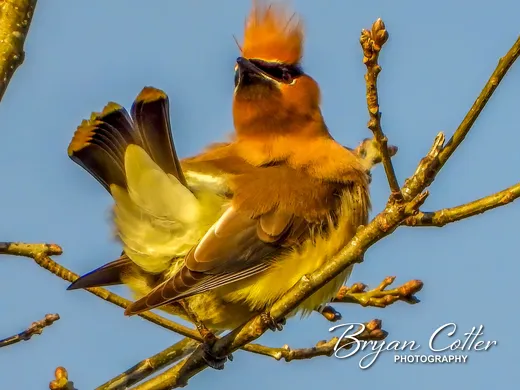
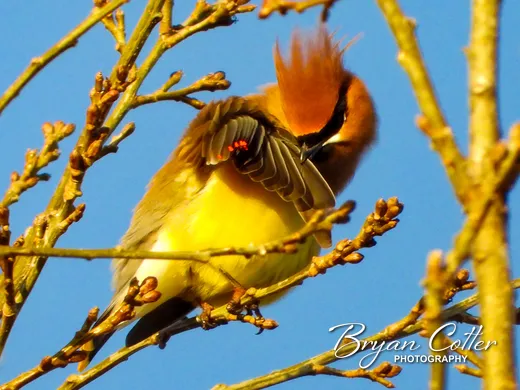
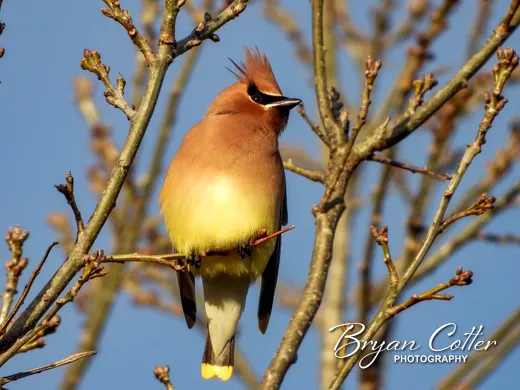
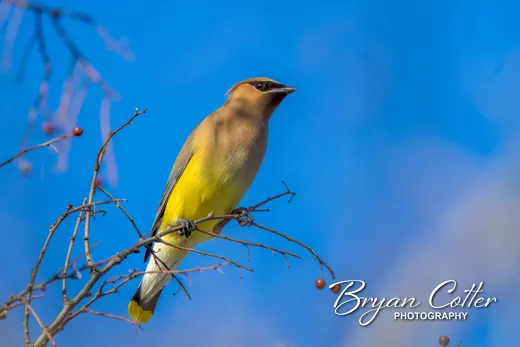
A sleek, soft-plumaged songbird that looks less feathered than upholstered. The body is a smooth fawn-brown shading to gray on the wings and tail, with a swept-back crest, a narrow black mask outlined in white, a pale yellow wash on the belly, and a tail tipped in a clean band of yellow. The name comes from the small red droplets on the wing, which are waxy extensions of the flight feather shafts and look exactly like sealing wax. Young birds are streaky and grayer, and lack the crisp mask.
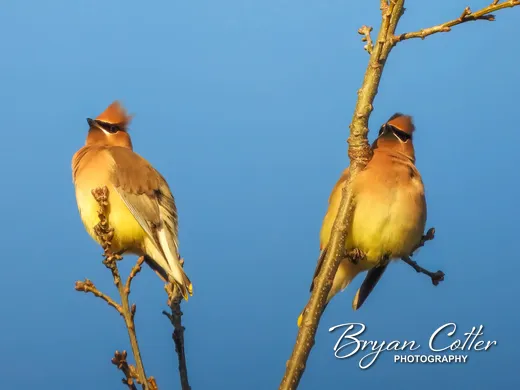
Waxwings live in flocks and move as one. A tree that held forty birds a moment ago will empty in a single collective burst, and the whole group will drop into the next fruiting tree down the street. They call constantly in flight, a very high, thin, hissing whistle that carries surprisingly far and is often the only warning you get before the flock arrives. Feeding birds sometimes pass a berry down a row perched shoulder to shoulder, each bird handing it to the next.
They are fruit specialists to an unusual degree, and a flock will strip a possumhaw or a yaupon in a day. Fermented berries can genuinely intoxicate them. Because they depend on fruit rather than insects, they nest later than almost any other North American songbird, waiting for summer fruit to ripen - and they breed well north of Texas.
Here they are winter birds, arriving in numbers from around October and lingering into May, when late flocks strip the mulberries before heading north. Their appearance in any given neighborhood is entirely a question of what is fruiting.
Join one of my guided birding tours! Fine art prints of my photos are also available.
© 2026 Bryan Cotter Photography privacy policy terms of use site by cotter designs