American Rubyspot
Hetaerina americana
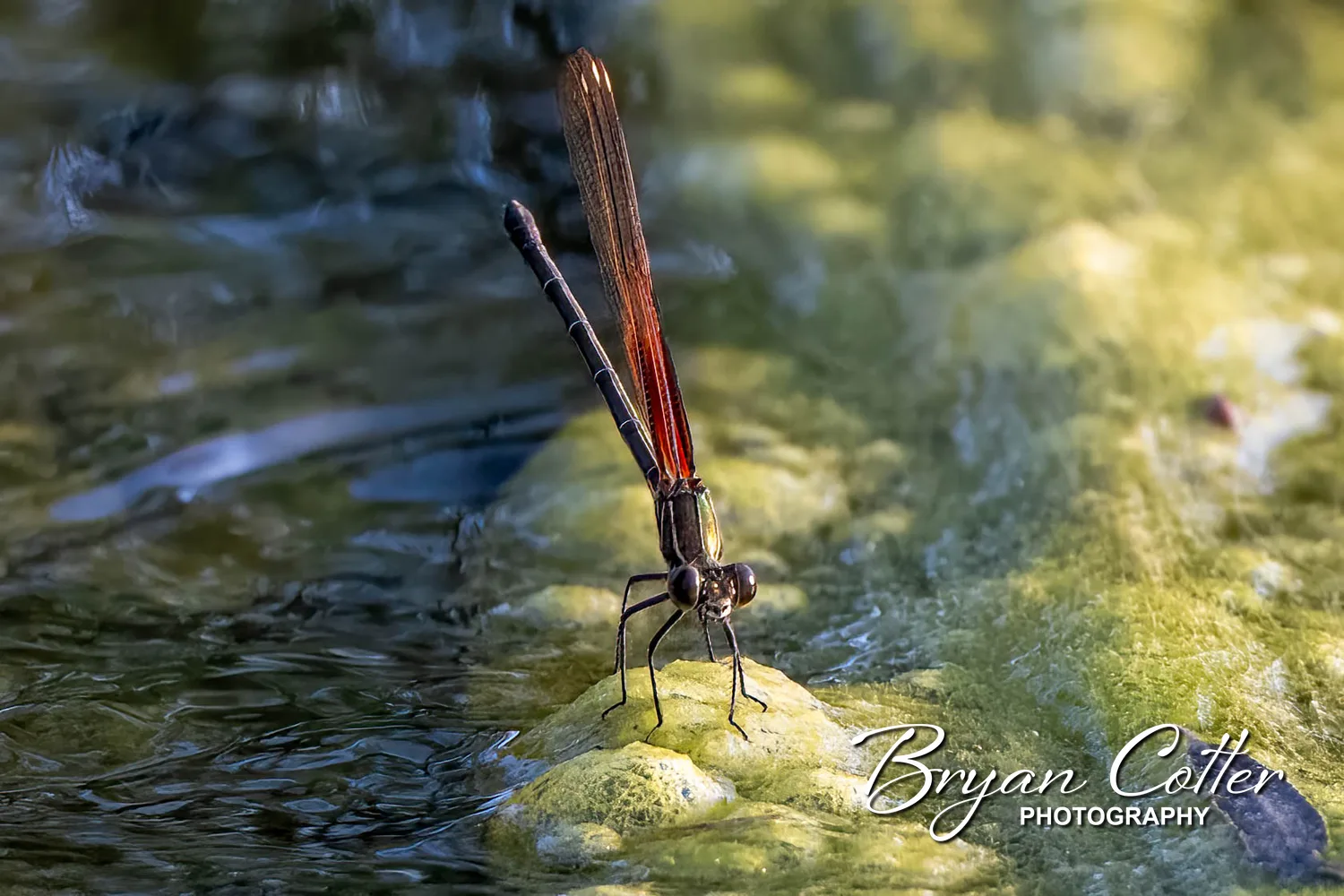
About the American Rubyspot
A broad-winged damselfly of running water, and one of the few insects on a Texas creek that stops people mid-stride. The male carries a brilliant metallic ruby-red patch at the base of each wing, spreading out from a bronzy-red body; catch him at the right angle and the whole basal third of the wing glows. Females are duller, bronze-green with amber wing bases, and both sexes are noticeably larger and broader-winged than the slim pond damselflies most people picture.
Rubyspots are creatures of moving water and rarely stray from it. Males perch on rocks, trailing branches, and streamside stems right at the edge of a riffle, holding small stretches of bank against one another through the warm hours. Disputes are settled by flight rather than contact - two males will spiral up together over the current before one gives way. Unlike most damselflies they often flick their wings open while perched rather than holding them closed over the back.
Breeding happens in the current. A female backs down a stem or a wet rock into flowing water, sometimes submerging completely for many minutes, and lays her eggs into submerged plant tissue while the male stands guard above. The larvae, called naiads, live among stones and roots in the streambed for the better part of a year, breathing through three leaf-like tails and hunting aquatic insects before crawling out to emerge as adults.
In Texas the American Rubyspot is widespread wherever clean flowing water persists, and it is common on the spring-fed creeks of the Hill Country and the Balcones escarpment. Adults are on the wing from late spring well into fall, and their presence is a fair sign that a creek is running healthy.
Join one of my guided birding tours! Fine art prints of my photos are also available.
© 2026 Bryan Cotter Photography privacy policy terms of use site by cotter designs