Blackbuck
Antilope cervicapra
About the Blackbuck
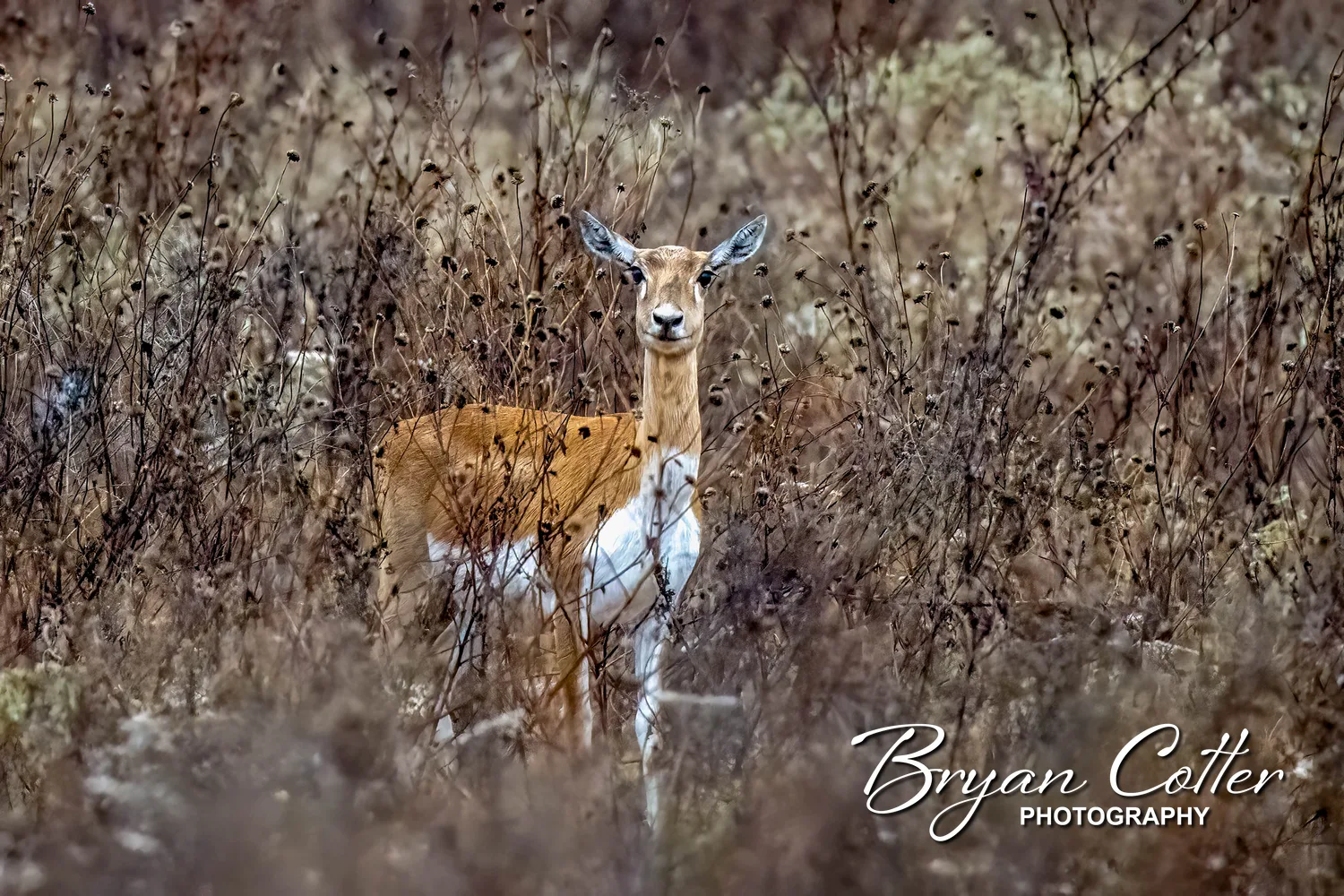
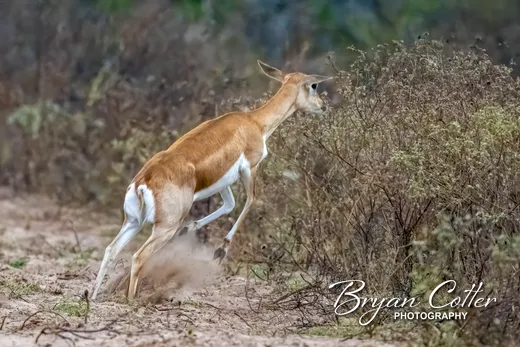
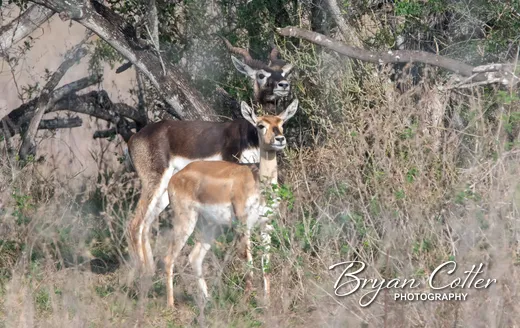
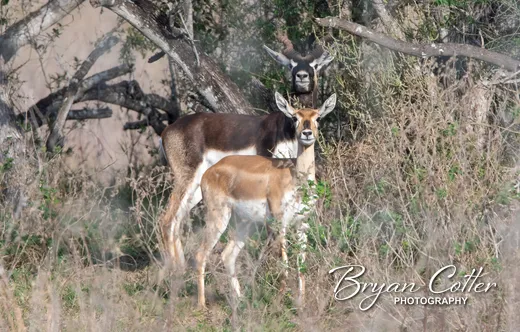
A small, sharply marked antelope from the Indian subcontinent, and one of the odder things you can encounter in South Texas. A mature buck is unmistakable - near-black above, clean white below, with white rings around the eyes and a white chin, carrying long corkscrew horns that spiral upward in tight rings. Does and young bucks look like a different animal entirely: fawn-tan where the buck is black, with the same white underparts and eye rings, and no horns at all.
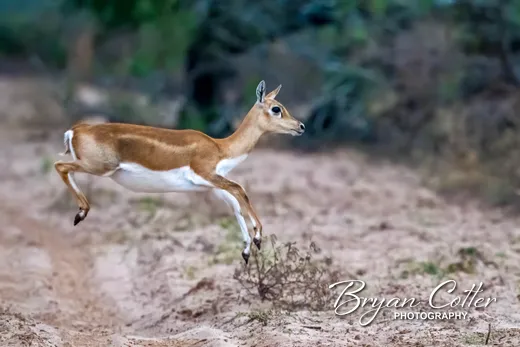
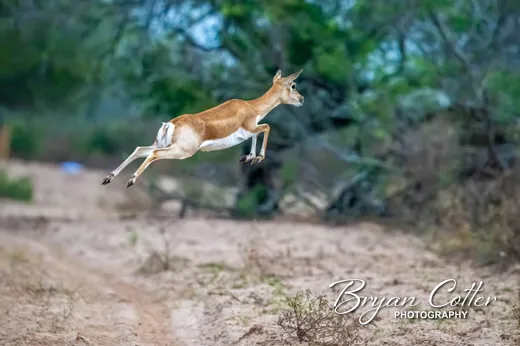
Blackbuck are animals of open country and they behave like it. They live in herds, keep their heads up, and run rather than hide, reaching speeds that put them among the fastest land mammals anywhere. Alarmed animals break into stiff-legged bounding leaps before settling into a flat sprint. Bucks darken with age and rank, so the blackest animal in a herd is usually the dominant one.
Breeding bucks hold small display territories and advertise from them, and a dominant buck will work hard to hold a group of does within his ground. In Texas, where winters are mild, breeding is spread across the year rather than confined to a season. A doe carries a single fawn and leaves it lying hidden in tall grass for its first weeks, returning to nurse, so a fawn is far more often stepped past than seen.
They are not native here. Texas ranches began importing them from India in the 1930s, and free-ranging herds on South Texas rangeland are now large enough that the Texas population is a genuine reservoir for a species under pressure in its homeland. There is no season on them - they are simply present, and on the right ranch they are as much a part of the landscape as the whitetails.
Join one of my guided birding tours! Fine art prints of my photos are also available.
© 2026 Bryan Cotter Photography privacy policy terms of use site by cotter designs