Pyrrhuloxia
Cardinalis sinuatus

About the Pyrrhuloxia
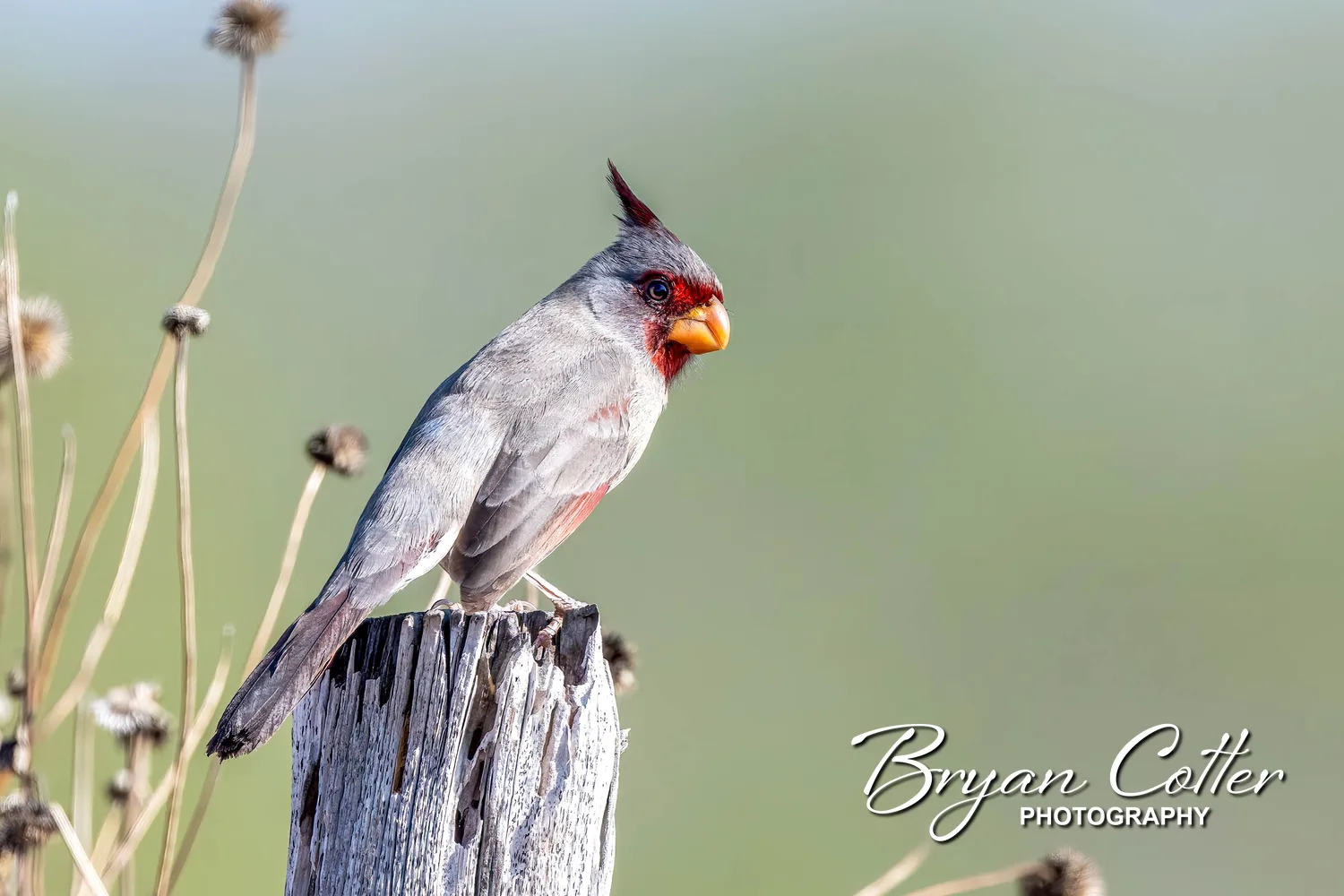
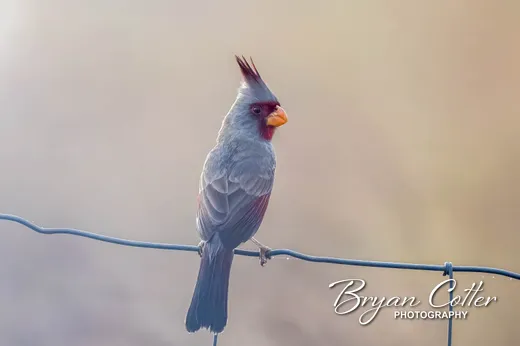
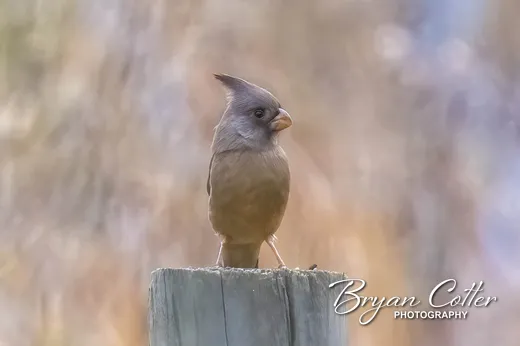
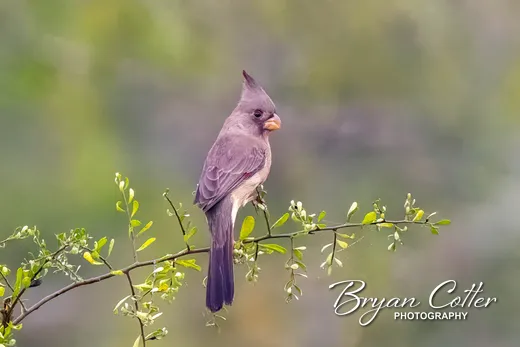
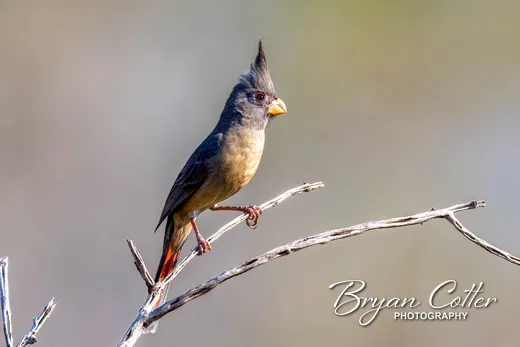
The desert answer to the cardinal, and the same bird in outline - same tall crest, same long tail, same size - but painted in soft gray with rose-red bleeding down the face, throat, center of the breast, wing edges, and tail. The tell is the bill. Where the cardinal carries a straight orange cone, the Pyrrhuloxia has a short, stubby, strongly curved pale-yellow bill that looks borrowed from a small parrot. Females are grayer still, with the red reduced to a wash.
Outside the breeding season Pyrrhuloxias gather into loose flocks and wander the thorn scrub, working seed heads, insects, and cactus fruit. The song is a whistle much like a cardinal's but thinner and more slurred, and the call note is a dry chink. They are less trusting than cardinals and tend to drop into the brush rather than sit up for you.
In Texas this is a true desert-southwest specialty: year-round through the Trans-Pecos and Big Bend, and across the South Texas brush country down into the Rio Grande Valley. Where mesquite meets the edge of town, Pyrrhuloxias and Northern Cardinals turn up together, and sorting the gray female cardinal from the Pyrrhuloxia comes down to that curved yellow bill.
Behind the lens it is a subtle bird, gray on gray in gray thorn scrub, so background separation matters more than usual. Late light is what brings the rose up out of the plumage. Watch the tops of ocotillo and mesquite for a singing male, and if you have access to a desert ranch water feature or feeding station, that is the reliable way to get one clean and close.
Join one of my guided birding tours! Fine art prints of my photos are also available.
© 2026 Bryan Cotter Photography privacy policy terms of use site by cotter designs