Western Honey Bee
Apis mellifera
About the Western Honey Bee
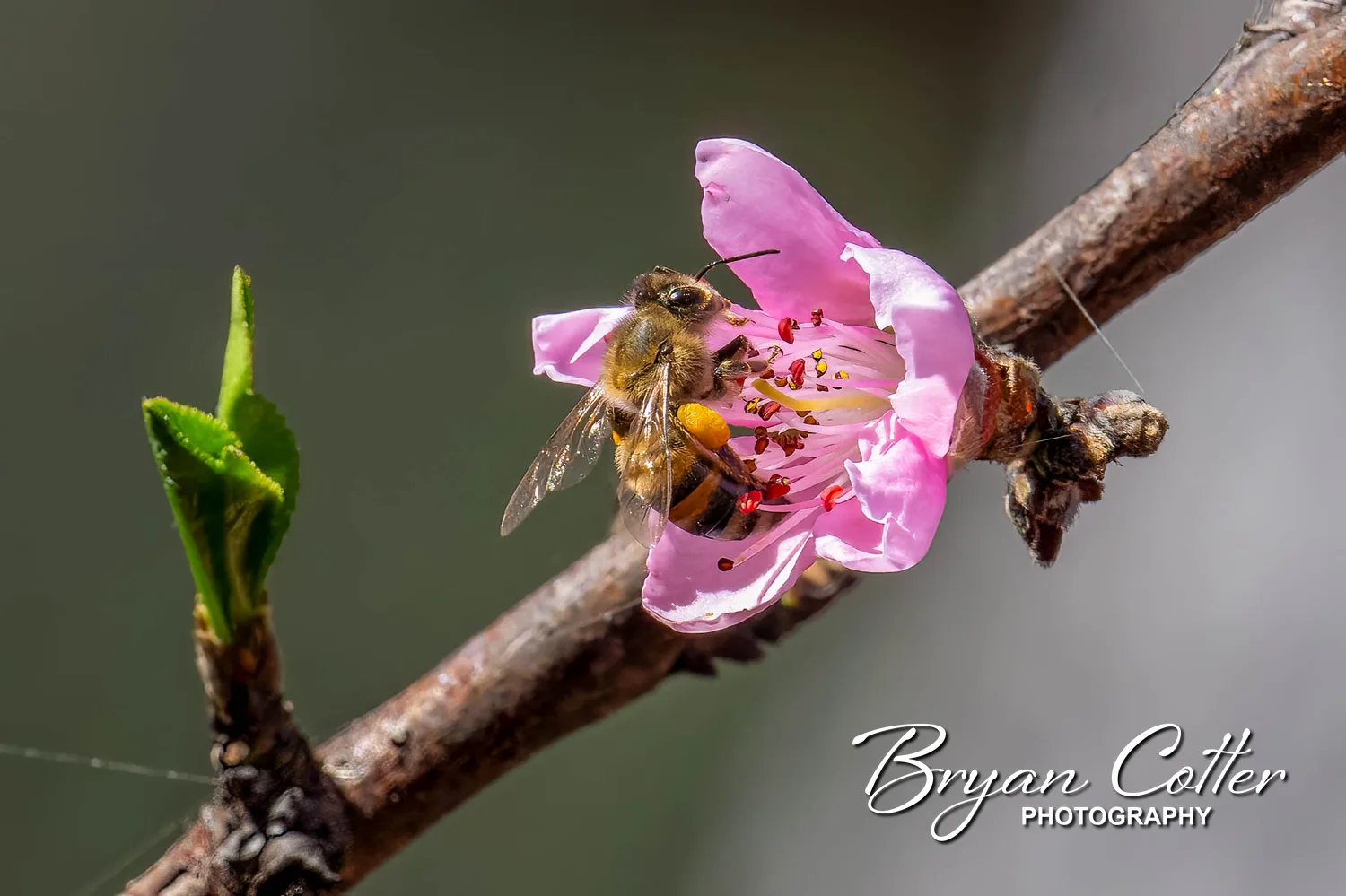
The Western Honeybee is the world's most important managed pollinator and a familiar sight on Texas flowers - a fuzzy, golden-and-brown banded bee, smaller and slimmer than the native bumblebees, with pollen baskets on the hind legs that ride home packed yellow.
A honeybee is never working for herself: each forager is one of tens of thousands of sterile sisters provisioning a single queen's colony. Foragers communicate flower locations through the famous waggle dance, and a strong hive can visit millions of blossoms in a season. Feral colonies nest in hollow trees, wall voids, and rock crevices.
Honeybees were brought from Europe in the 1600s and are now naturalized throughout Texas, active nearly year-round in the state's mild climate. Most feral Texas colonies carry Africanized genetics, so wild hives deserve respectful distance - individual foragers on flowers are harmless.
Join one of my guided birding tours! Fine art prints of my photos are also available.
© 2026 Bryan Cotter Photography privacy policy terms of use site by cotter designs