Rivoli's Hummingbird
Eugenes fulgens

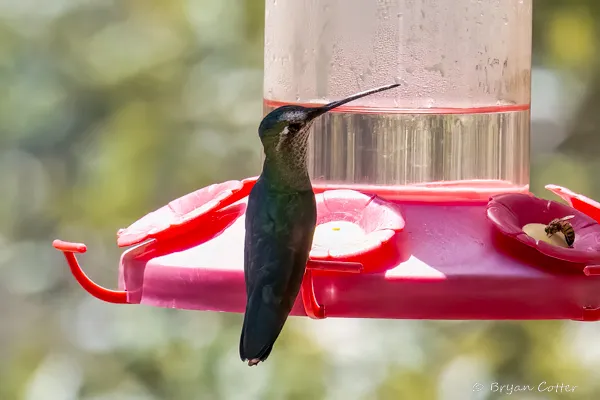
About the Rivoli's Hummingbird
Rivoli's Hummingbird is a giant among North American hummingbirds - nearly twice the bulk of a Ruby-throated, with a proportionally long bill and wings that beat slowly enough to see. The male looks blackish until the light catches him: then the crown ignites violet-purple and the throat flares brilliant emerald, one of the most dramatic color reveals in the family.
Its size changes its physics - Rivoli's glides between flowers more than smaller hummingbirds and works a huge daily circuit of nectar sources rather than defending a single patch, a strategy called trap-lining. It also takes more insects than most hummingbirds, hawking gnats and gleaning spiders to fuel that big body.
The species is a bird of pine-oak mountain forests from the southwestern United States through Central America. It carried the name Magnificent Hummingbird for decades until a 2017 split restored the original honorific for the Duke of Rivoli; the "magnificent" half of the old name went to a Central American cousin.
In Texas, Rivoli's is a rare visitor from the mountain Southwest, with most records at feeders in the Davis and Guadalupe Mountains and scattered strays elsewhere, usually in late summer and fall. At a feeder it is unmistakable - the hummingbird that makes all the others look like sparks around a slow-burning ember.
Join one of my guided birding tours! Fine art prints of my photos are also available.
© 2026 Bryan Cotter Photography privacy policy terms of use site by cotter designs