Great Horned Owl
Bubo virginianus
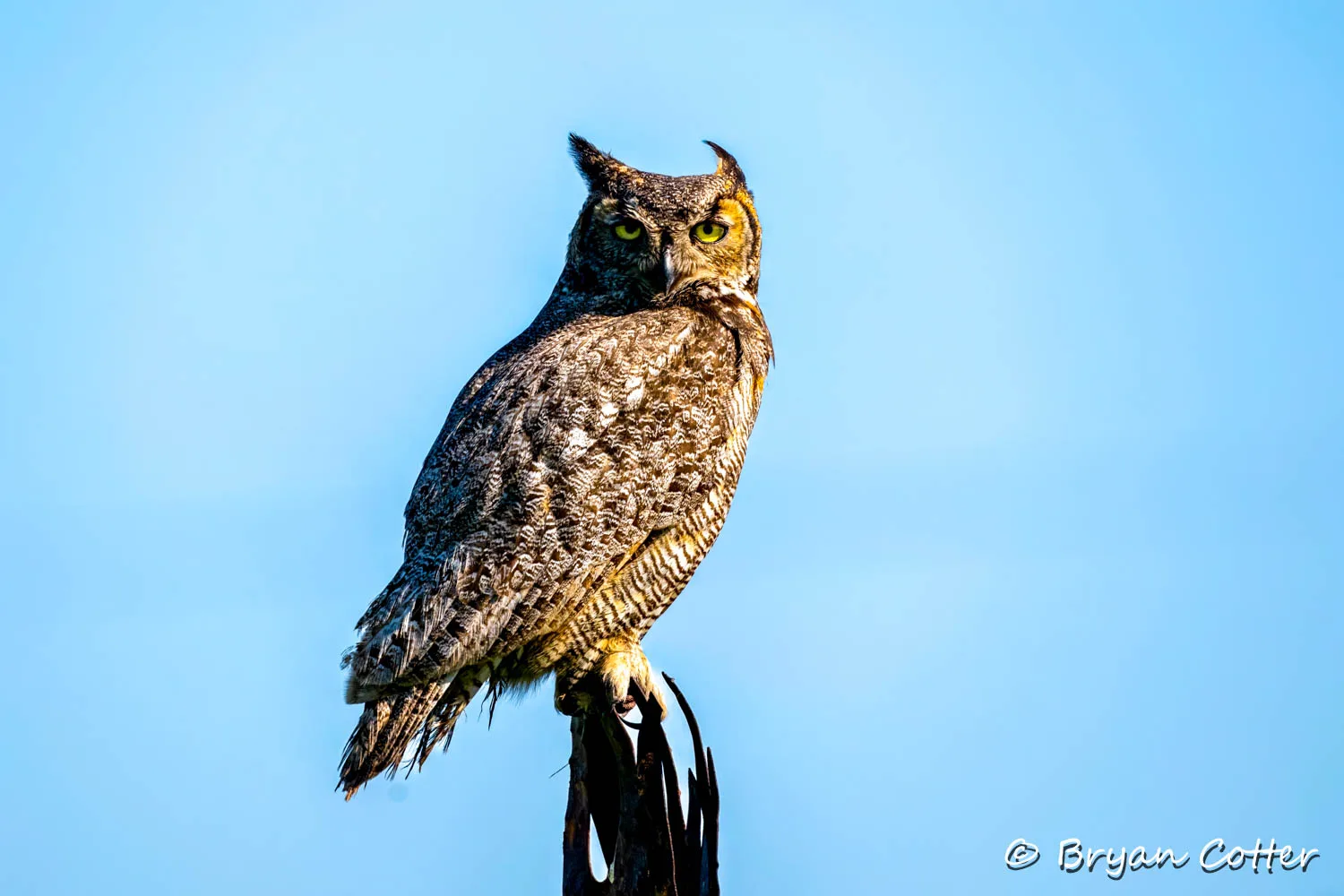
About the Great Horned Owl
The Great Horned Owl is the boss of the night shift - a bulky, barrel-shaped owl with ear tufts, a rusty facial disk, and huge yellow eyes, found from the Arctic treeline to Tierra del Fuego in nearly every habitat in between. Its deep, five-note hoot, duetted by pairs on winter nights, is the classic owl sound of North America.
It is a predator of almost absurd breadth: rabbits and rats, skunks (a favorite - owls have little sense of smell), ducks, herons, snakes, other owls, and house cats have all appeared on the menu. The grip of its feet is crushing, the flight dead silent on soft-edged feathers, and the eyes are backed by neck vertebrae that swivel the head three-quarters of the way around.
Great Horned Owls nest earlier than almost any other Texas bird, laying eggs in late December and January in old hawk, heron, or squirrel nests - the female incubating through ice storms with snow on her back. Young "branchers" clamber out of the nest weeks before they can fly, and the begging screech of a juvenile is a common, ghostly summer-night sound.
The species is a year-round resident across every corner of Texas, from city parks to desert canyons. Listen at dusk for the hooting pair - the deeper voice, counterintuitively, is the smaller male.
Join one of my guided birding tours! Fine art prints of my photos are also available.
© 2026 Bryan Cotter Photography camera gear privacy policy terms of use site by cotter designs