Brown Pelican
Pelecanus occidentalis




About the Brown Pelican
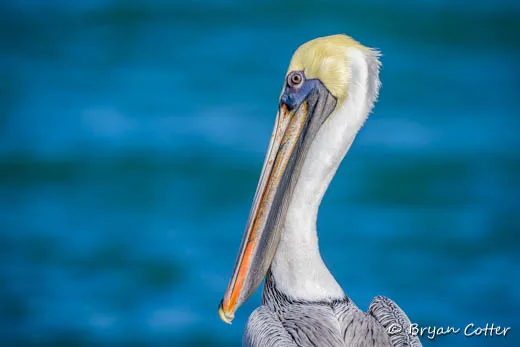
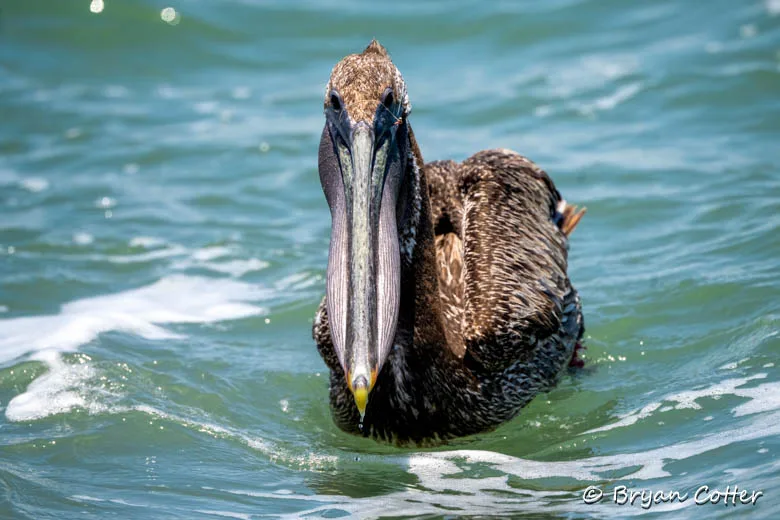
The Brown Pelican is the Gulf Coast's working waterbird - huge, unhurried, and built around a bill and pouch that hold more than its stomach can. Adults are silver-brown with a white-and-yellow head; breeding birds add a rich chocolate hindneck. Squadrons glide single file inches above the swells, riding the cushion of air off the waves, then rise and crash headfirst into schools of menhaden and mullet.
That plunge is engineered: air sacs under the skin cushion the impact, the body rotates left in the dive to protect the windpipe, and the pouch balloons around as much as two and a half gallons of water and fish. The water drains before the fish go down - the moment the Laughing Gulls exploit, sometimes standing on a pelican's head to steal the catch.
The species was nearly lost: DDT-era eggshell thinning collapsed colonies so completely that the Brown Pelican - Louisiana's state bird - vanished from Louisiana entirely and was endangered for decades. Its recovery after the 1972 DDT ban, aided by translocations of Florida birds, is one of the signature conservation comebacks, and it was delisted in 2009.
In Texas, Brown Pelicans are now abundant year-round along the entire coast, nesting on spoil islands and loafing on every jetty and pier - so familiar it is easy to forget how close they came. Sharp-eyed observers occasionally pick one out far inland on the big reservoirs, usually a wandering youngster.
Join one of my guided birding tours! Fine art prints of my photos are also available.
© 2026 Bryan Cotter Photography camera gear privacy policy terms of use site by cotter designs