Loggerhead Shrike
Lanius ludovicianus
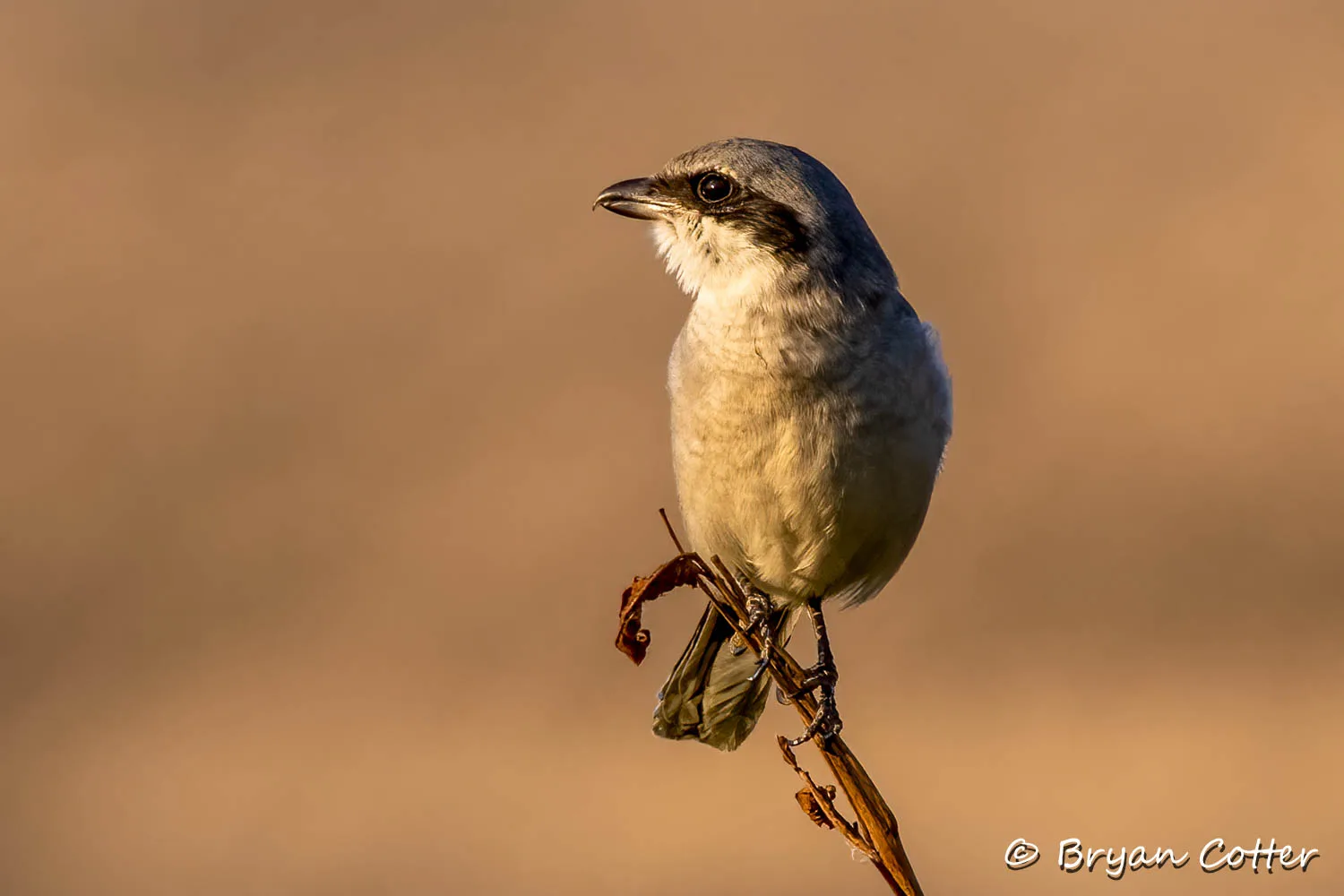
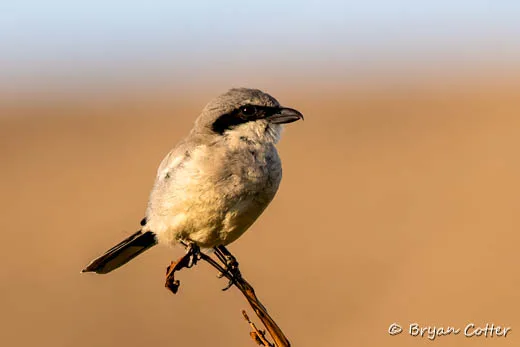
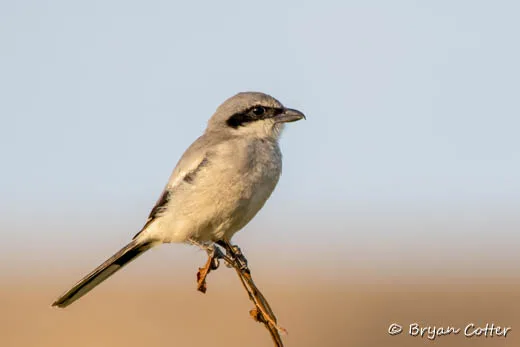


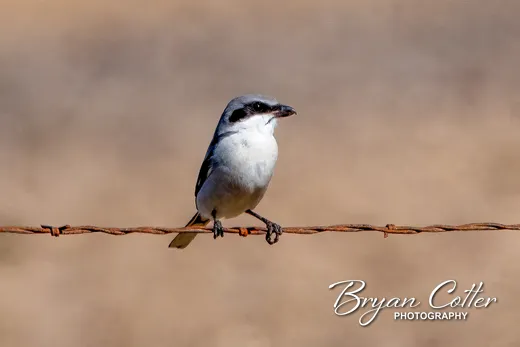
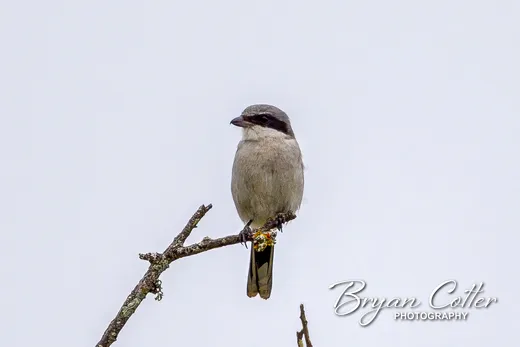
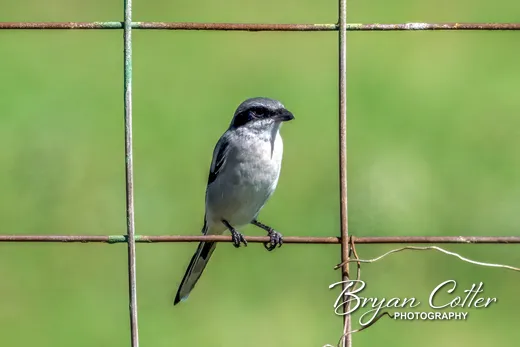
About the Loggerhead Shrike
The Loggerhead Shrike is a songbird with a raptor's job description - a gray, black-masked hunter the size of a mockingbird, with a hooked bill, sharp white wing flashes, and the unnerving pantry habit that earned shrikes the name "butcherbird".
Lacking a hawk's talons, the shrike improvises: it kills grasshoppers, lizards, mice, and small birds with that hooked bill, then impales the prey on thorns, mesquite spines, and barbed wire, both to hold the meal while it feeds and to store food for later. A fence line studded with skewered grasshoppers is a shrike's larder and one of the classic sights of Texas ranch country. The technique even lets shrikes eat lubber grasshoppers, whose toxins break down after a day or two on the wire.
Shrikes hunt from low, open perches - fences, wires, and lone shrubs - dropping on prey in the grass, and their flight is distinctive: a fast, low burst with whirring wings and a sweep up to the next perch, white patches flashing.
The Loggerhead Shrike is a year-round Texas resident, commonest in winter when northern birds arrive, but it is also one of North America's steepest-declining grassland birds, its numbers falling for decades with the loss of open pasture and insect life. The fence-wire butcherbird is still a common Texas sight - and worth never taking for granted.
Join one of my guided birding tours! Fine art prints of my photos are also available.
© 2026 Bryan Cotter Photography camera gear privacy policy terms of use site by cotter designs