Bull Frog
Lithobates catesbeianus
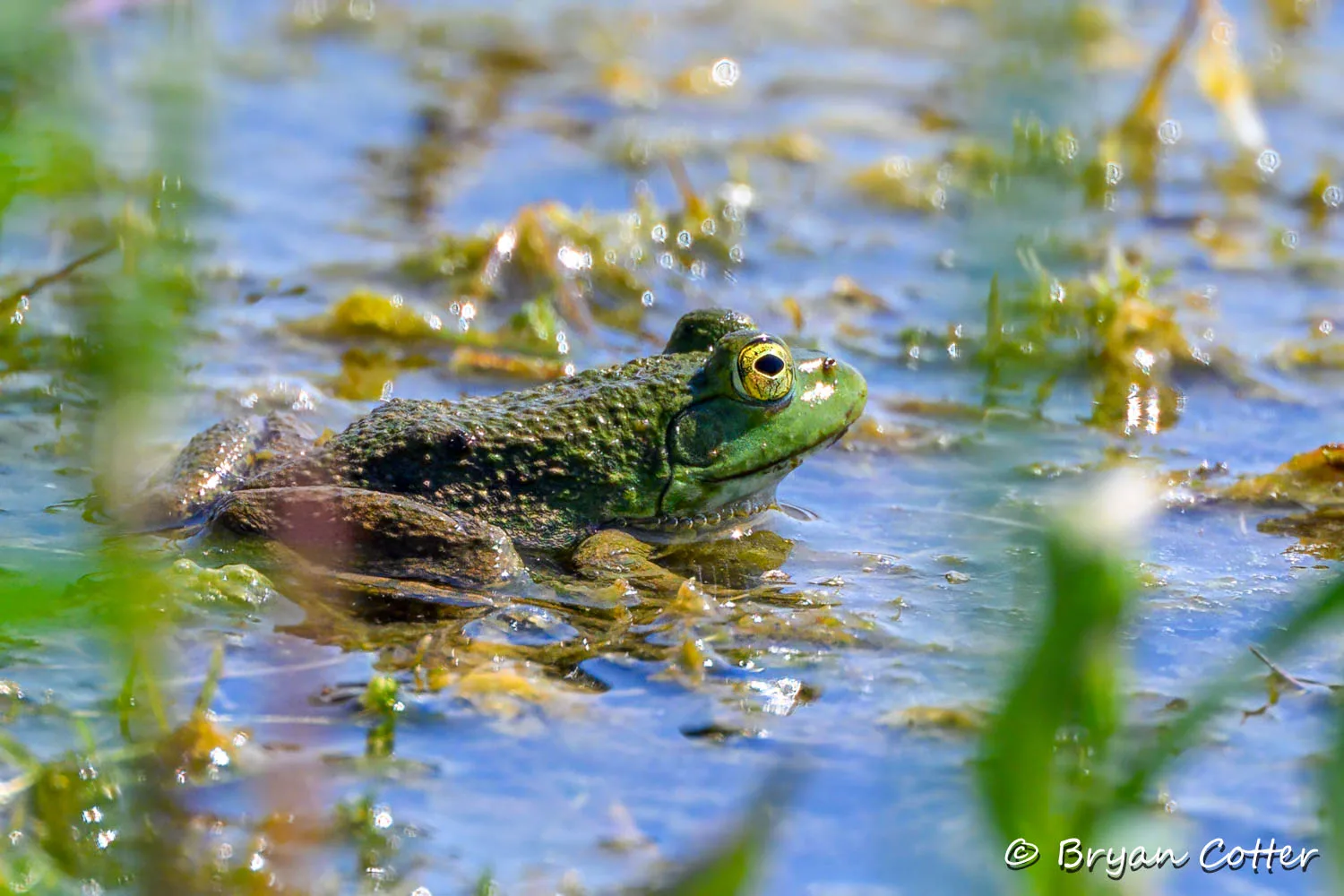
About the Bull Frog
The American Bullfrog is the heavyweight of Texas ponds - the largest frog in North America, up to eight inches of mottled green muscle with a vast eardrum behind each golden eye and a bass "jug-o-rum" call that rolls across summer water and carries for half a mile.
A bullfrog is an ambush predator with no sense of restraint: anything that fits in the enormous mouth is food - insects, crawfish, fish, other frogs, snakes, ducklings, mice, and famously other bullfrogs. It hunts by lunging, using its own eyeballs (which retract to help push prey down the throat) as part of the swallowing machinery.
Males stake out calling territories along the bank and wrestle rivals in the shallows; females lay floating sheets of up to twenty thousand eggs, and the big greenish tadpoles may take one to two years to transform, overwintering in the mud.
Bullfrogs are native across the eastern two-thirds of Texas and thrive in nearly every permanent pond, tank, and lake edge - though where they have been introduced west of their native range (and around the world), that indiscriminate appetite makes them a serious invasive predator of native wildlife. On a warm Texas night the jug-o-rum chorus remains one of the state's defining summer sounds.
Join one of my guided birding tours! Fine art prints of my photos are also available.
© 2026 Bryan Cotter Photography camera gear privacy policy terms of use site by cotter designs