Great Egret
Ardea alba








About the Great Egret
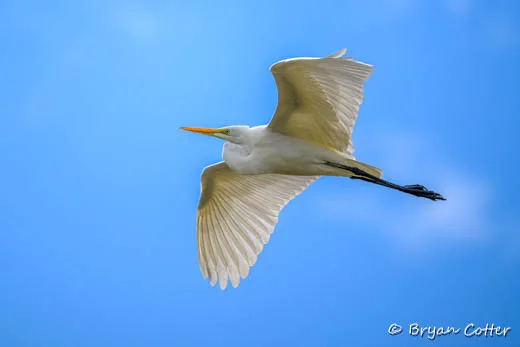
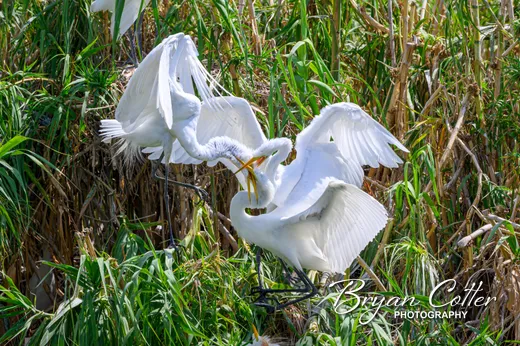
The Great Egret is the tall, white exclamation point of Texas wetlands - a yard-high heron, all white, with a dagger of a yellow bill and long black legs. In breeding season long lacy plumes called aigrettes cascade off the back, and the bare skin of the face turns lime green.
It hunts with the patience of a statue, standing motionless or wading with agonizing slowness before the neck uncoils in a strike faster than the eye can follow. Fish are the staple, but frogs, crawfish, snakes, and even small mammals and birds all go down the long white throat.
Those breeding plumes nearly destroyed the species: in the late 1800s egret feathers were worth more than gold by weight for the hat trade, and plume hunters shot out entire colonies. The slaughter sparked the founding of the Audubon movement, and the Great Egret remains the National Audubon Society's emblem - a reminder of how close it came. Protected, the species rebounded across the continent.
In Texas, Great Egrets are year-round birds of marshes, lake edges, and roadside ditches statewide, nesting colonially in rookeries with other herons, ibis, and spoonbills. Careful and deliberate where the Snowy Egret is frantic, a hunting Great Egret at first light is one of the most photogenic sights on any Texas shoreline.
Join one of my guided birding tours! Fine art prints of my photos are also available.
© 2026 Bryan Cotter Photography camera gear privacy policy terms of use site by cotter designs