Golden-crowned Kinglet
Regulus satrapa




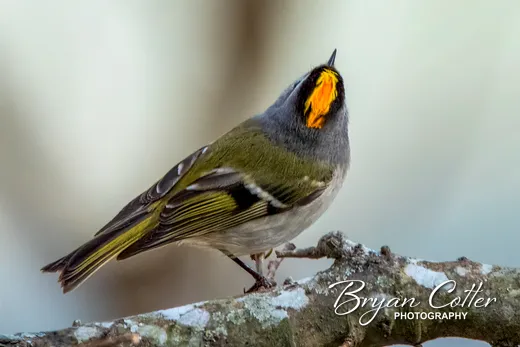

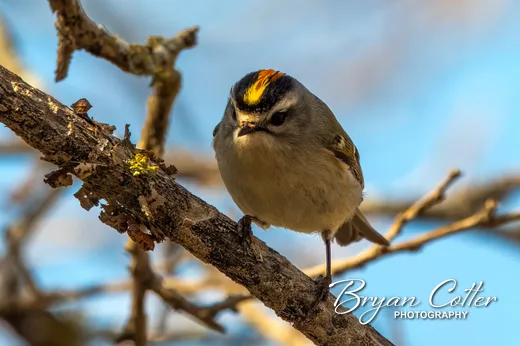


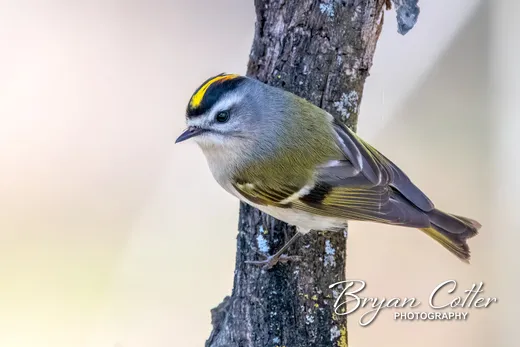
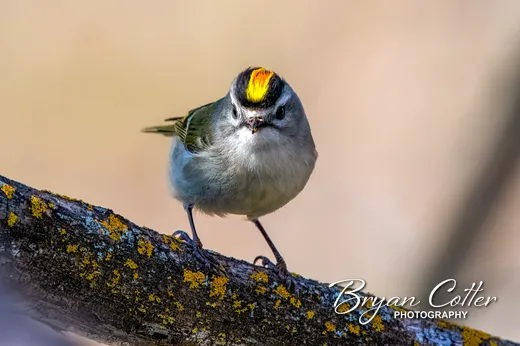
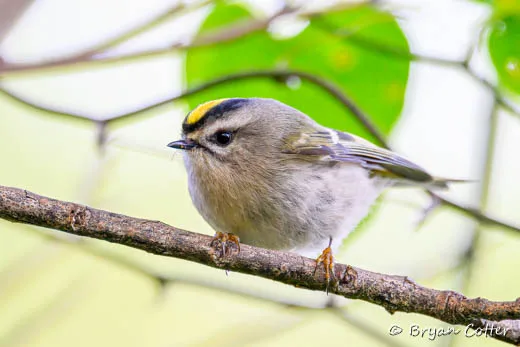
About the Golden-crowned Kinglet
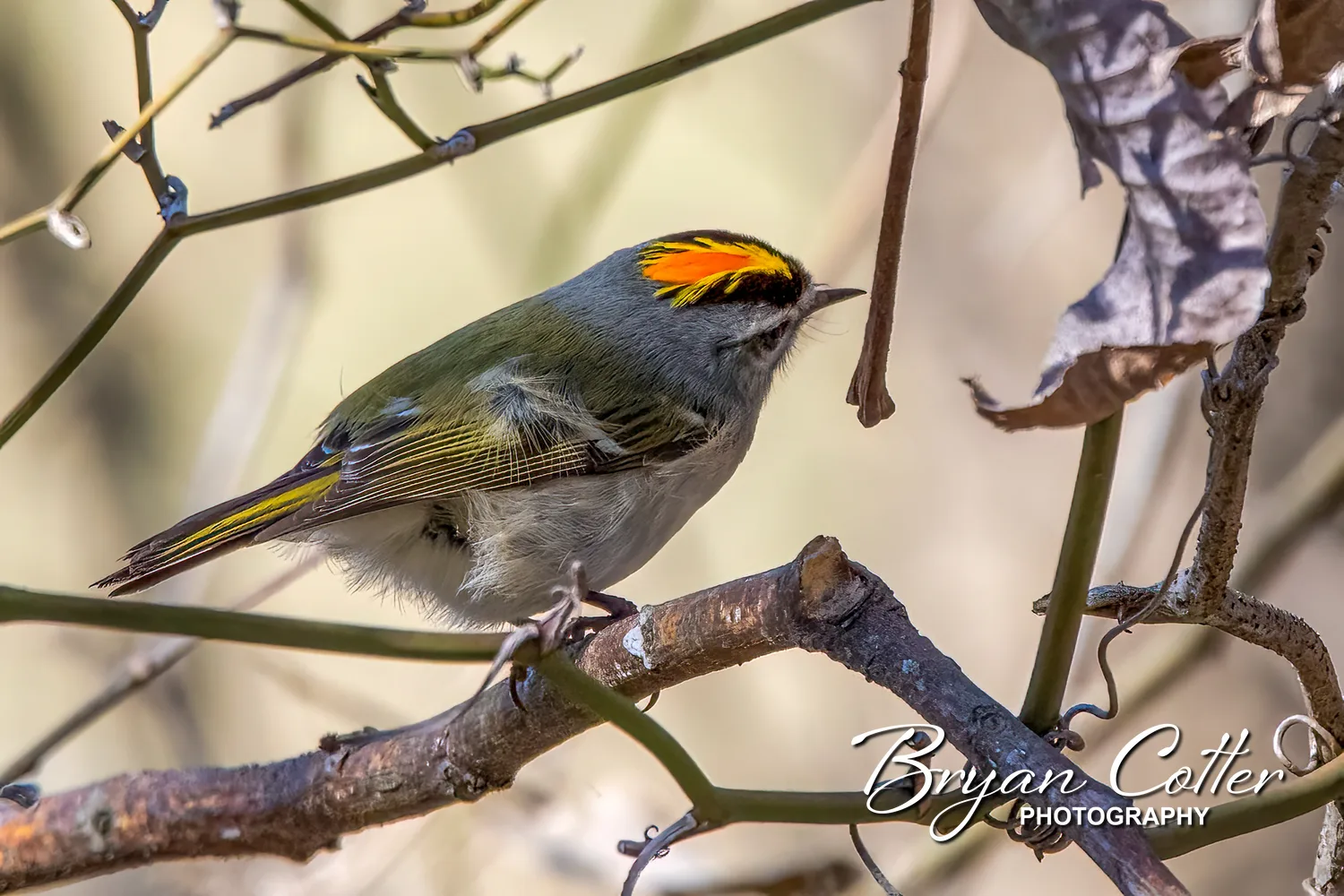
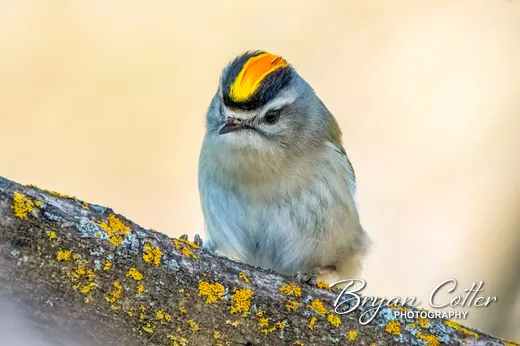
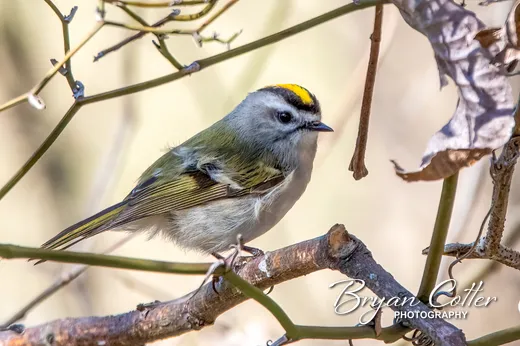
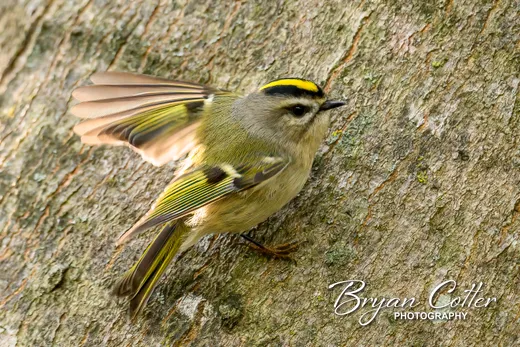
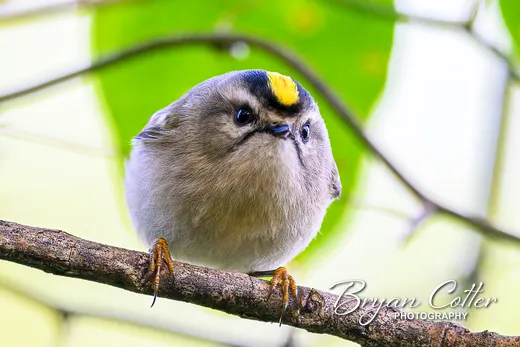
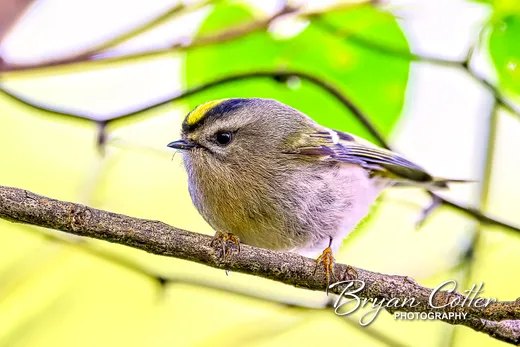
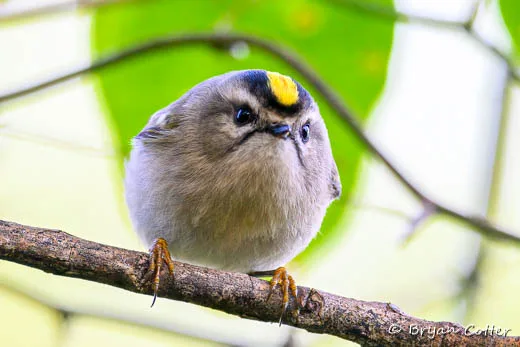
The Golden-crowned Kinglet is a bird that seems too small for winter - barely heavier than a hummingbird, olive-gray with bold face stripes and a crown of blazing yellow (edged orange in males) that flares open when the bird is excited. It is one of the smallest songbirds in North America, and yet it winters in conifer forests where nights drop far below zero.
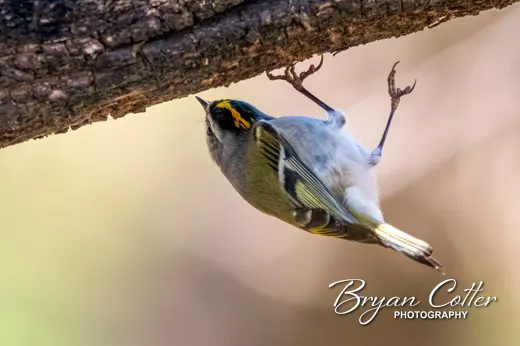
Kinglets survive on constant motion and metabolism: they forage nearly every daylight second, hover-gleaning tiny insects, eggs, and larvae from twig tips and needle clusters, wings flicking nervously the whole time. On bitter nights they huddle together in dense cover to share heat. Their contact call - a thin, high "see-see-see" - is so high-pitched it is often the first sound birders lose with age.
The nest, built high in a spruce, is a tiny hanging cup of moss and spider silk into which the female somehow fits eight or nine eggs - one of the largest clutches, relative to body size, of any songbird.
In Texas the Golden-crowned Kinglet is a winter visitor, arriving in November and gone by March, favoring junipers, pines, and oak woodlands, usually in mixed flocks with chickadees, titmice, and Ruby-crowned Kinglets. Numbers vary year to year with northern conditions; in good flight years the high, sibilant calls seem to drift from every cedar brake in the Hill Country.
Join one of my guided birding tours! Fine art prints of my photos are also available.
© 2026 Bryan Cotter Photography camera gear privacy policy terms of use site by cotter designs