Great Crested Flycatcher
Myiarchus crinitus
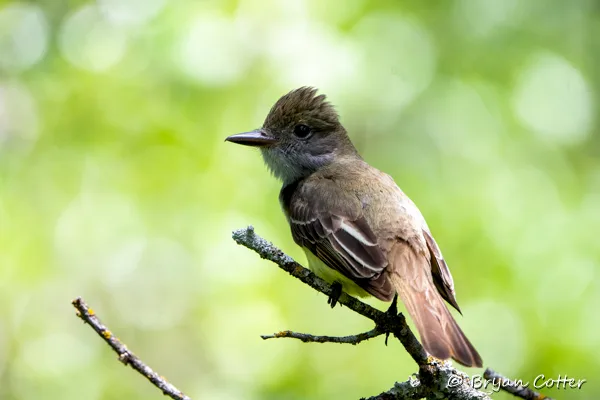
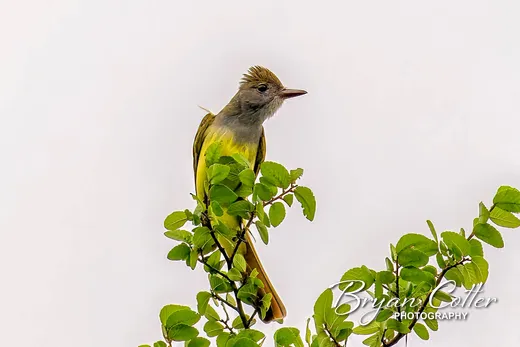

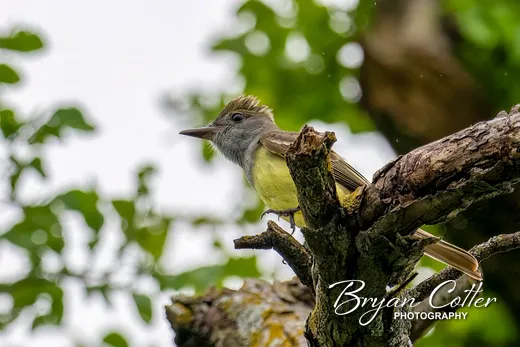
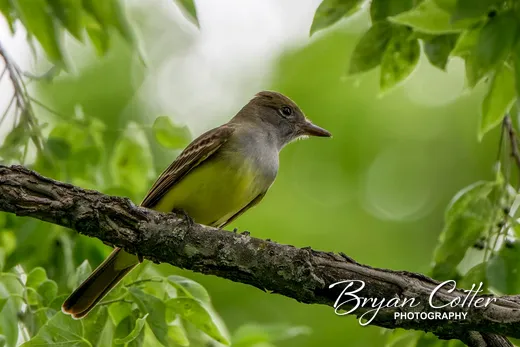
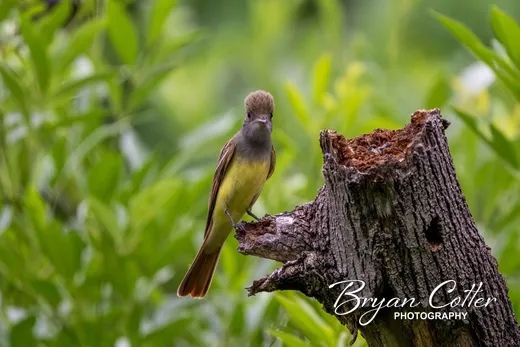

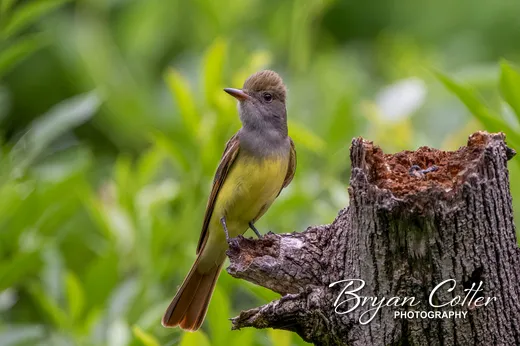
About the Great Crested Flycatcher
The Great Crested Flycatcher is the big, noisy flycatcher of the treetops - lemon-yellow belly, gray chest, cinnamon flashes in the wings and tail, and a bushy crest that gives it a permanently alert look. It lives higher in the canopy than most of its family, and many people know its loud, rising "wheep!" for years before ever seeing the bird that makes it.
It hunts from high perches with sallies after flying insects and hover-gleans caterpillars, katydids, and beetles from the foliage, also taking small fruits in season. Unlike the pewees and phoebes below it, the Great Crested rarely comes low; it is a bird of the leafy ceiling.
This is the only cavity-nesting flycatcher in the eastern United States - it cannot excavate, so it depends on woodpecker holes, natural cavities, and nest boxes. Famously, it very often weaves a shed snakeskin into the nest lining (crinkly plastic will do in a pinch), a habit thought to deter squirrels and other nest predators.
Great Crested Flycatchers breed across the eastern half of Texas from April to September, common in oak woodlands, river bottoms, and shaded neighborhoods, then winter from Mexico to South America. The "wheep" calls falling silent in early fall is one of the quiet signs that summer is ending in the eastern Texas woods.
Join one of my guided birding tours! Fine art prints of my photos are also available.
© 2026 Bryan Cotter Photography camera gear privacy policy terms of use site by cotter designs