Osprey
Pandion haliaetus
About the Osprey
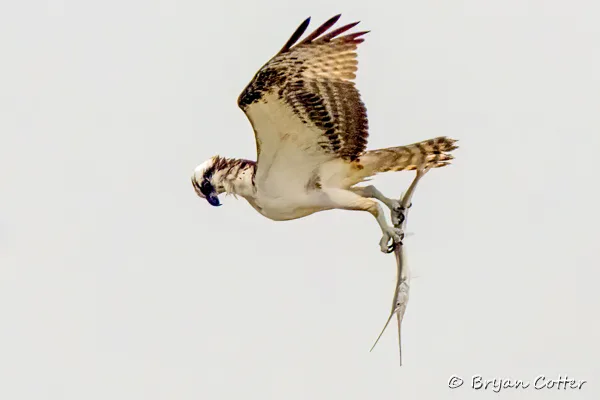
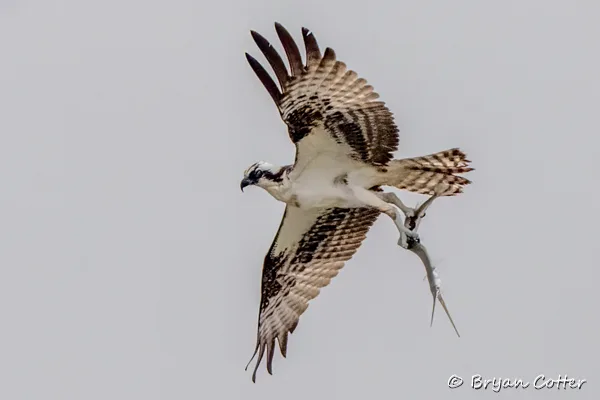
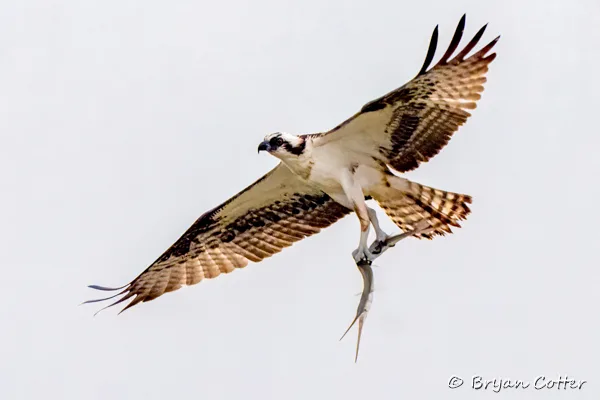
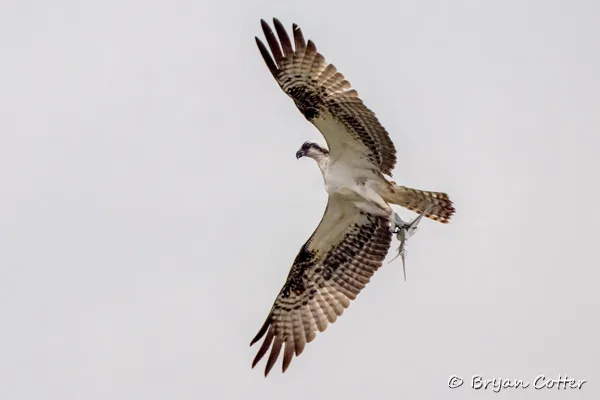
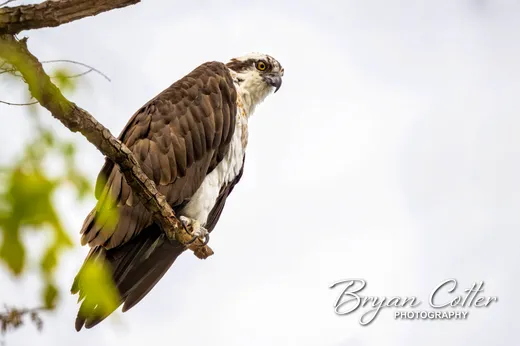
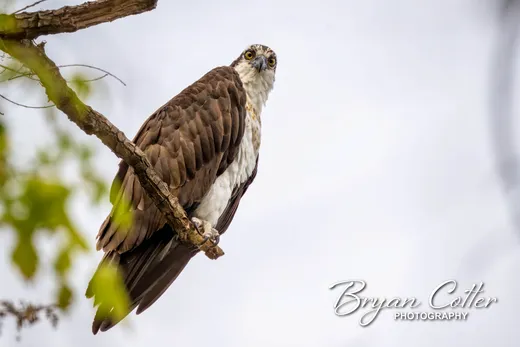
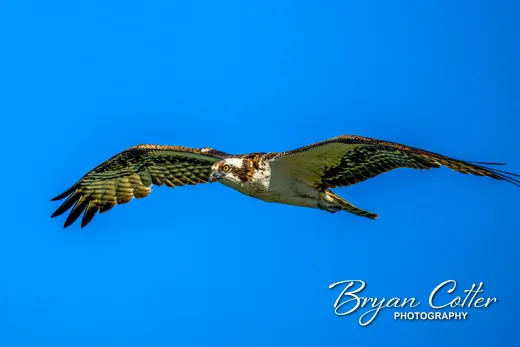
The Osprey is the world's fish hawk - a big, long-winged raptor, dark above and white below with a bold dark eye-stripe, found on every continent except Antarctica. It eats fish almost exclusively, and everything about it is built for the job: reversible outer toes and spiny footpads for gripping slippery prey, dense oily plumage for the plunge, and nostrils that close underwater.
An Osprey hunts by cruising and hovering 30 to 100 feet over the water, then folding into a feet-first crash that can take it completely under. Success rates are startlingly high - studies regularly find they catch a fish on a quarter to half of their dives - and a bird flying off with its catch will shuffle the fish in its talons to face head-first, cutting wind resistance like a carried torpedo.
Ospreys build massive stick nests on dead trees, channel markers, and platforms, adding material year after year until some nests weigh hundreds of pounds. The species was a poster child of the DDT era - eggshell thinning crashed populations - and its recovery since the 1972 ban ranks among conservation's clearest wins.
In Texas, Ospreys are common migrants and winter residents on reservoirs, rivers, and the coast, with birds present from late summer through spring; a few non-breeders linger all year. Any big lake in the state is likely to have a wintering Osprey whistling from a snag - a high, chirping call that seems too small for the bird.
Join one of my guided birding tours! Fine art prints of my photos are also available.
© 2026 Bryan Cotter Photography camera gear privacy policy terms of use site by cotter designs