Glaucous Gull
Larus hyperboreus
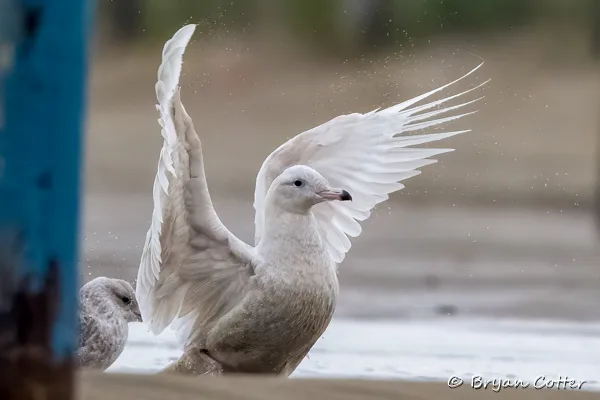
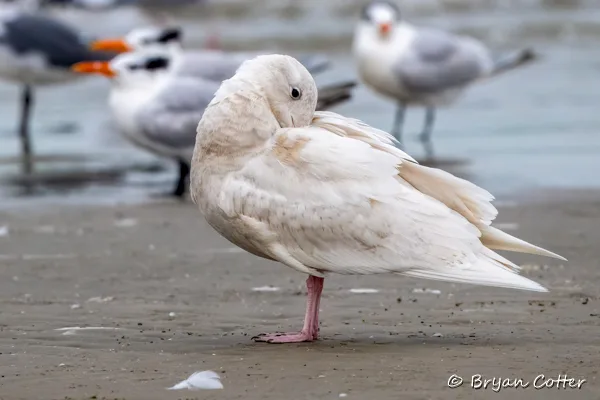
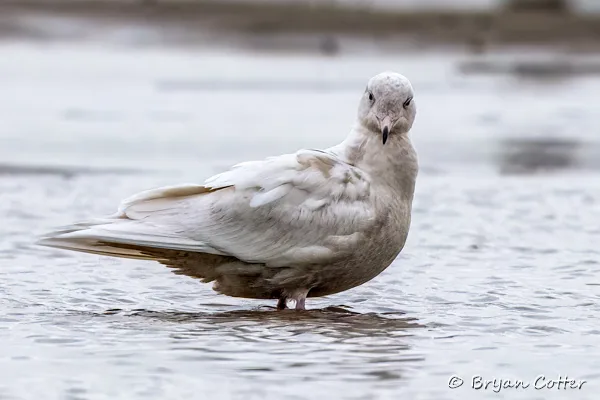
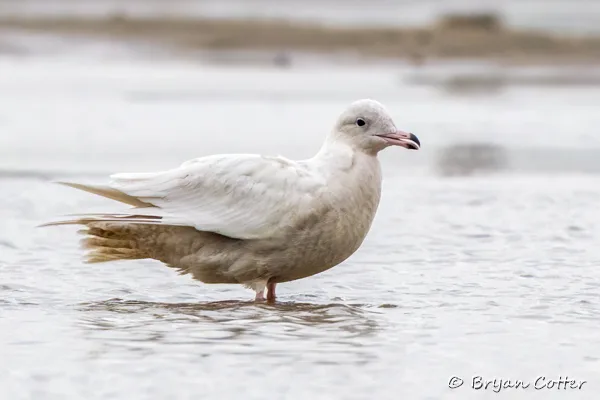
About the Glaucous Gull
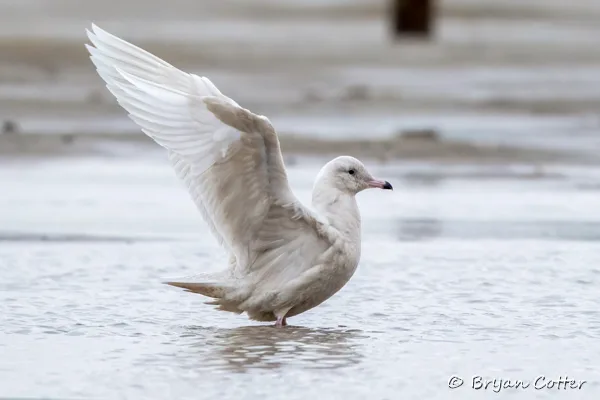
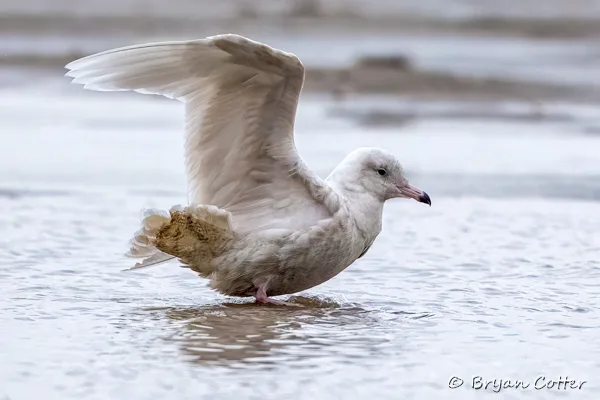
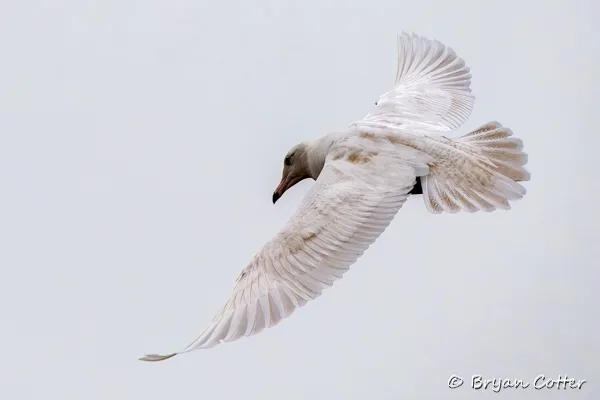
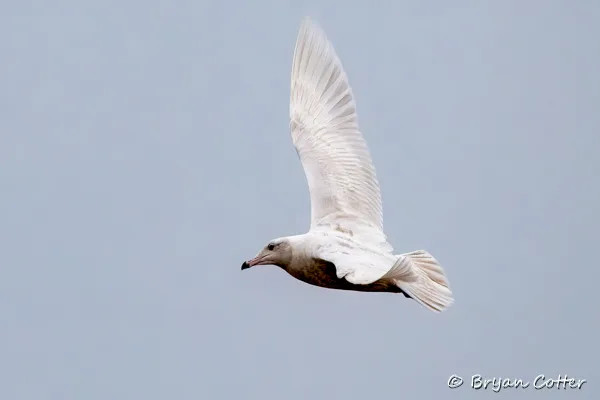
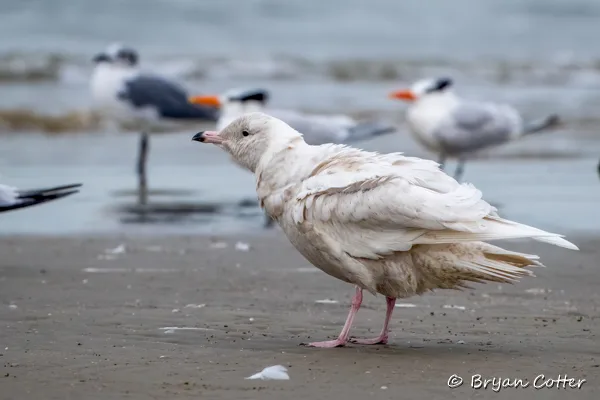
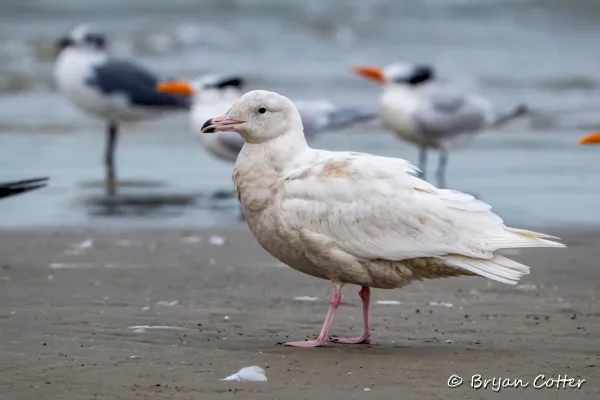
The Glaucous Gull is the great pale ghost of the far north - one of the largest gulls in the world, breeding on high-Arctic coasts and cliffs and drifting south only when winter pushes it. It stands out in a crowded gull flock for what it lacks: there is no black anywhere in the wingtips at any age, just clean frosty white or pale biscuit, a feature shared in Texas only by the much rarer Iceland Gull.
Adults are pearl-gray above with white wingtips, a heavy yellow bill, and pink legs; the birds most often seen in Texas are youngsters, milky-white to pale tea-colored overall with a sharply two-toned pink-and-black bill. In any plumage the bird is huge - as big as a Great Black-backed Gull - with a flat crown and a fierce, small-eyed expression that fits its reputation on the breeding grounds, where it is a major predator of eggs, chicks, and even adult seabirds.
Glaucous Gulls are omnivores of the coldest coasts: fish, carrion, refuse, shellfish, and whatever a winter beach or landfill offers. They are patient, dominant scavengers, and a single bird will hold its spot in a squabbling gull mob simply by being the biggest thing there.
In Texas the Glaucous Gull is a scarce winter prize, with a few found most years along the upper and central coast among the big mixed gull flocks at jetties, beaches, and landfills - and very rarely on inland reservoirs. Picking one out of thousands of Herring Gulls on a cold, wind-blown beach is exactly the kind of needle-in-a-haystack search that makes winter gull-watching addictive.
Join one of my guided birding tours! Fine art prints of my photos are also available.
© 2026 Bryan Cotter Photography camera gear privacy policy terms of use site by cotter designs