Dickcissel
Spiza americana
About the Dickcissel
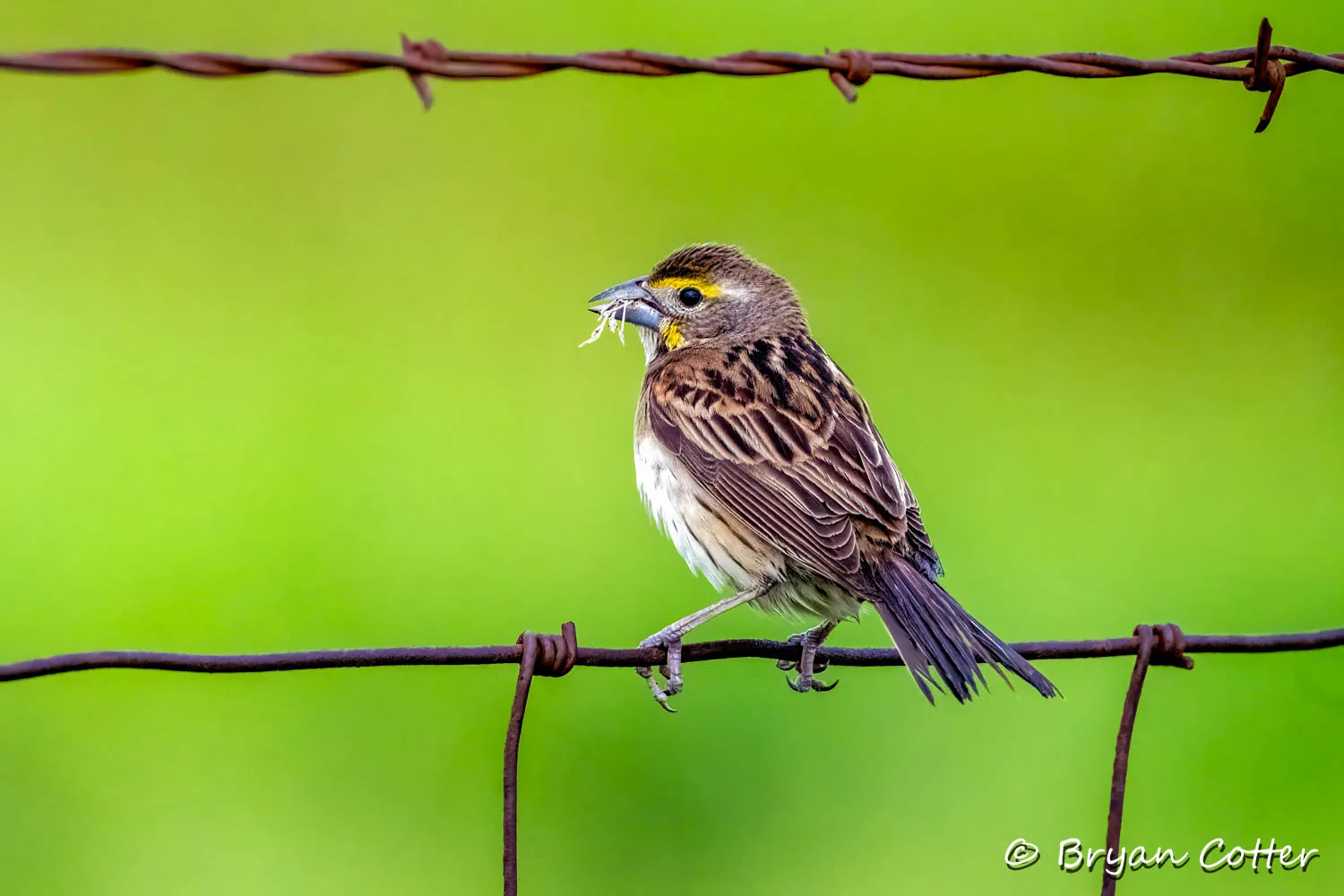
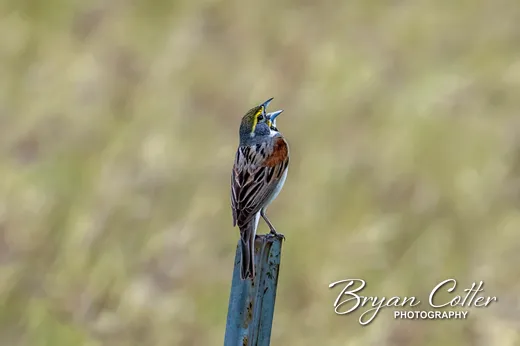
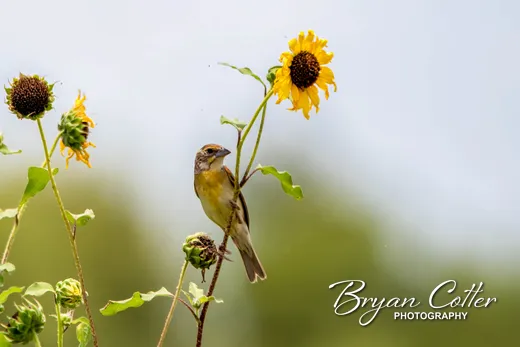
The Dickcissel looks like a miniature meadowlark - yellow breast, black bib, chestnut shoulder - and sounds like its own name, the male's dry "dick-dick-ciss-ciss-ciss" carrying across every weedy field in his territory. It is a bird of the tallgrass prairie at heart, and Texas grasslands fill with them in spring.
Males arrive first and sing tirelessly from fence wires and weed stalks, often collecting more than one mate - Dickcissels are among the most polygynous of North American songbirds, with a successful male attracting several females to nest in his patch of cover. The female alone builds the nest, incubates, and raises the young, hidden low in dense grass and forbs.
After breeding, Dickcissels do something few of our songbirds do: they gather into enormous flocks and funnel down to the llanos of Venezuela and Colombia, where millions winter together in roosts so large they can darken the sky. That concentration makes the species vulnerable - a single poisoning event on the wintering grounds can kill huge numbers - and its fortunes swing more than most grassland birds'.
In Texas, Dickcissels are common spring and summer breeders in prairies, hayfields, and roadside weeds through the eastern two-thirds of the state, arriving in April and mostly gone south by September. In migration they turn up almost anywhere, often betrayed by a flat, electric-buzzer flight call overhead.
Join one of my guided birding tours! Fine art prints of my photos are also available.
© 2026 Bryan Cotter Photography camera gear privacy policy terms of use site by cotter designs