Caspian Tern
Hydroprogne caspia
About the Caspian Tern
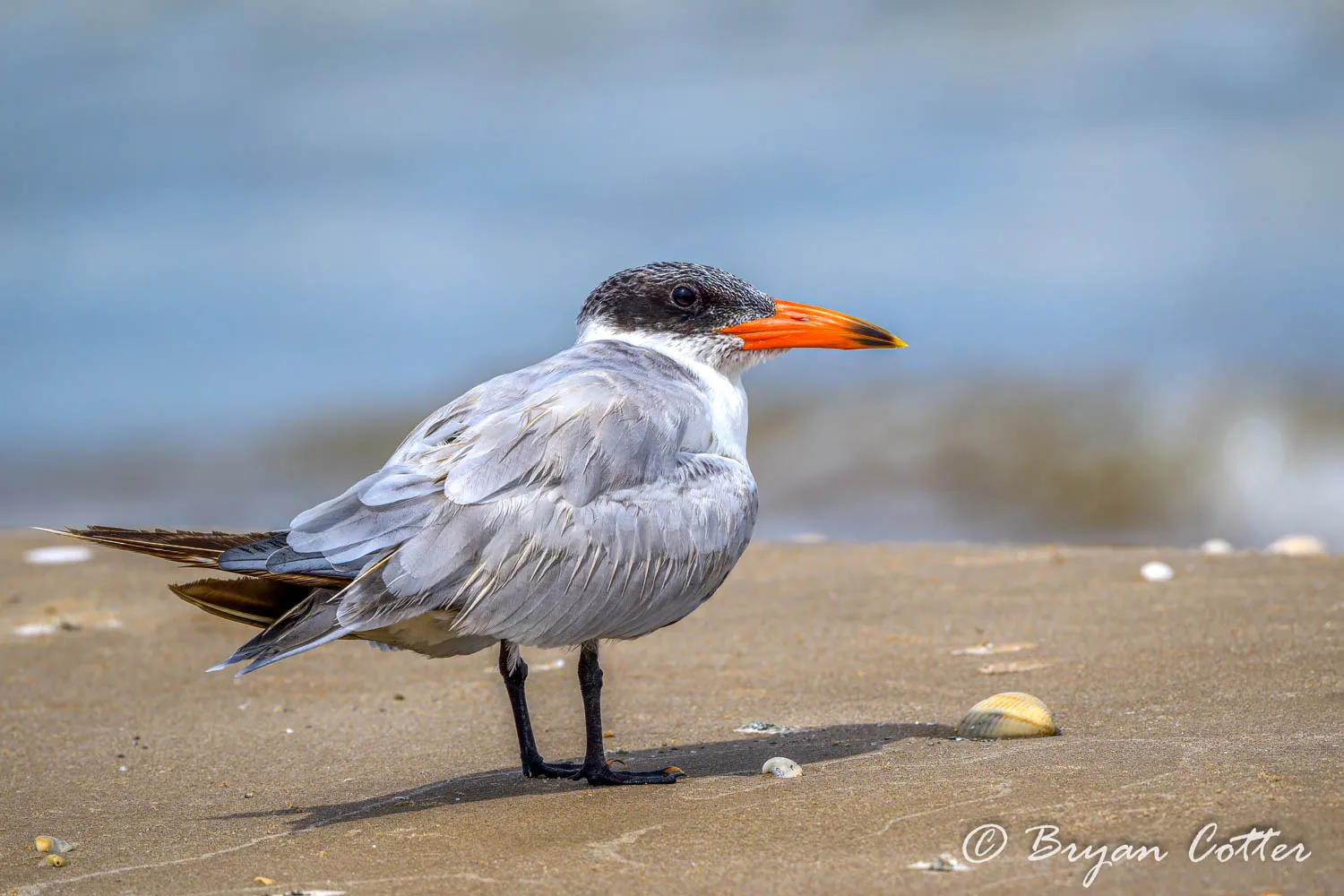
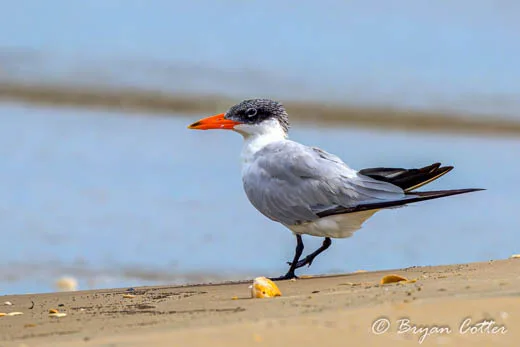
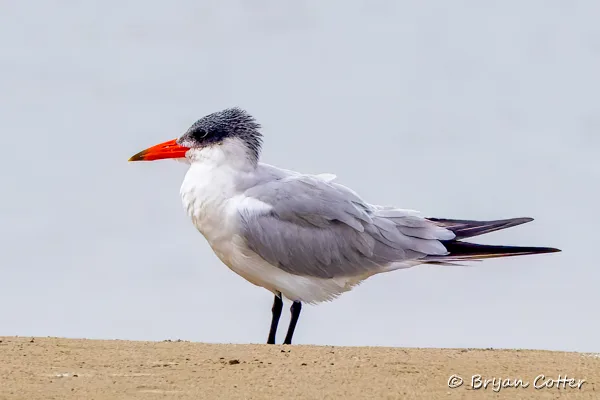
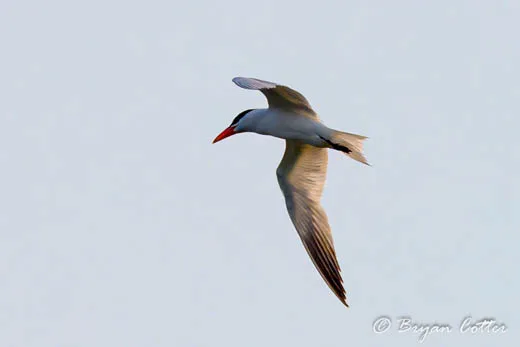
The Caspian Tern is the largest tern in the world - gull-sized, broad-winged, and built like a heavyweight - with a massive blood-red bill, dipped faintly in black at the tip, that makes it unmistakable at any distance. The black cap of breeding season fades to a peppered gray-black in winter, but the bill never dims. In flight it is powerful rather than graceful, rowing along on slow, deep wingbeats where smaller terns flutter.
It fishes like a tern twice its ambition: patrolling high over open water, hanging on a brief heavy hover, then folding up and hitting the surface hard enough to throw spray. Fish make up nearly all of the diet, and a Caspian will carry a catch for miles, calling constantly. That call is part of the experience - a deep, rasping croak utterly unlike the squeaky notes of the smaller terns, and young birds keep up a whining beggar call for months after fledging, trailing their parents deep into winter.
Caspian Terns nest on every continent except Antarctica, one of the widest ranges of any seabird. Texas birds nest in scattered colonies on bare shell and spoil islands along the coast, usually alongside Royal Terns and skimmers, where their size alone settles most arguments over nesting space.
In Texas the Caspian Tern is a year-round bird of the coast and a regular visitor to large inland reservoirs, especially from late summer through winter, when singles and small groups patrol lakes far from salt water. On a jetty rail or sandbar lineup, the Caspian is the tern that looks like it was drawn at the wrong scale - a full head taller than the Royals beside it, with the heaviest bill on the beach.
Join one of my guided birding tours! Fine art prints of my photos are also available.
© 2026 Bryan Cotter Photography camera gear privacy policy terms of use site by cotter designs